What safety features are critical for a commercial 23seats bus?
- VIP-User
- 2026-08-11
- 7
Critical safety features for a commercial 23seats bus include a high-strength anti-rust steel chassis frame, impact-resistant PT+PBT alloy body panels, a sensitive dual-circuit braking system, electric power-assisted steering, and a robust suspension configuration combining MacPherson independent front and leaf-spring rear setups to ensure stability under heavy passenger loads across varied terrain.
Core Solutions & Key Takeaways
- Structural Chassis Integrity: High-strength anti-rust steel frameworks prevent corrosion and structural fatigue under continuous full-capacity passenger operation.
- Advanced Panel Materials: Injection-molded PT+PBT alloy front covers provide superior impact resistance compared to traditional fiberglass components.
- Dual Suspension Balance: Front MacPherson independent suspension paired with heavy-duty rear leaf springs maintains tire contact, vibration damping, and load distribution.
- Active Handling & Braking: Automotive-grade electric power-assisted steering paired with responsive braking systems guarantees minimal stopping distance and control precision in public operational areas.
Detailed Architectural/Principle Analysis
Commercial passenger transportation requires continuous focus on structural safety and dynamic stability. In multi-passenger transit environments like airport shuttle corridors, scenic areas, and large resorts, vehicle safety relies on chassis design, shock absorption systems, and collision resistance. Models such as the LQV23 incorporate high-strength anti-rust steel within the main chassis structure to mitigate structural degradation caused by environmental exposure and repetitive payload stress.
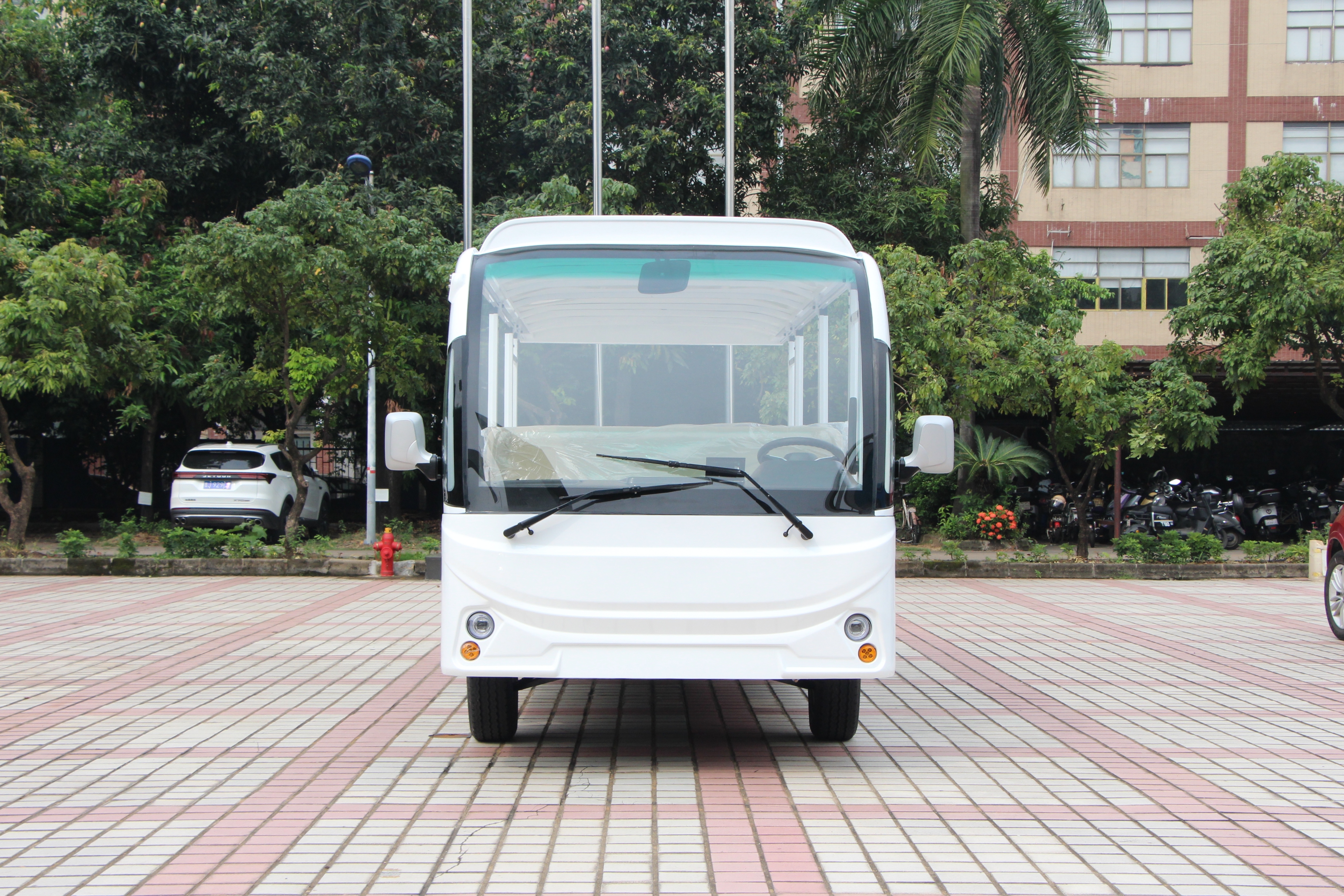
Front-end impact protection depends heavily on material physics. Utilizing PT+PBT alloy injection molding for the front cover significantly enhances energy absorption during minor collisions, preventing brittle fractures common in standard composite bodies. For handling safety, combining MacPherson independent suspension on the front axle with leaf-spring suspension on the rear axle manages body roll during turns while supporting total gross vehicle weight across 23 seated positions.
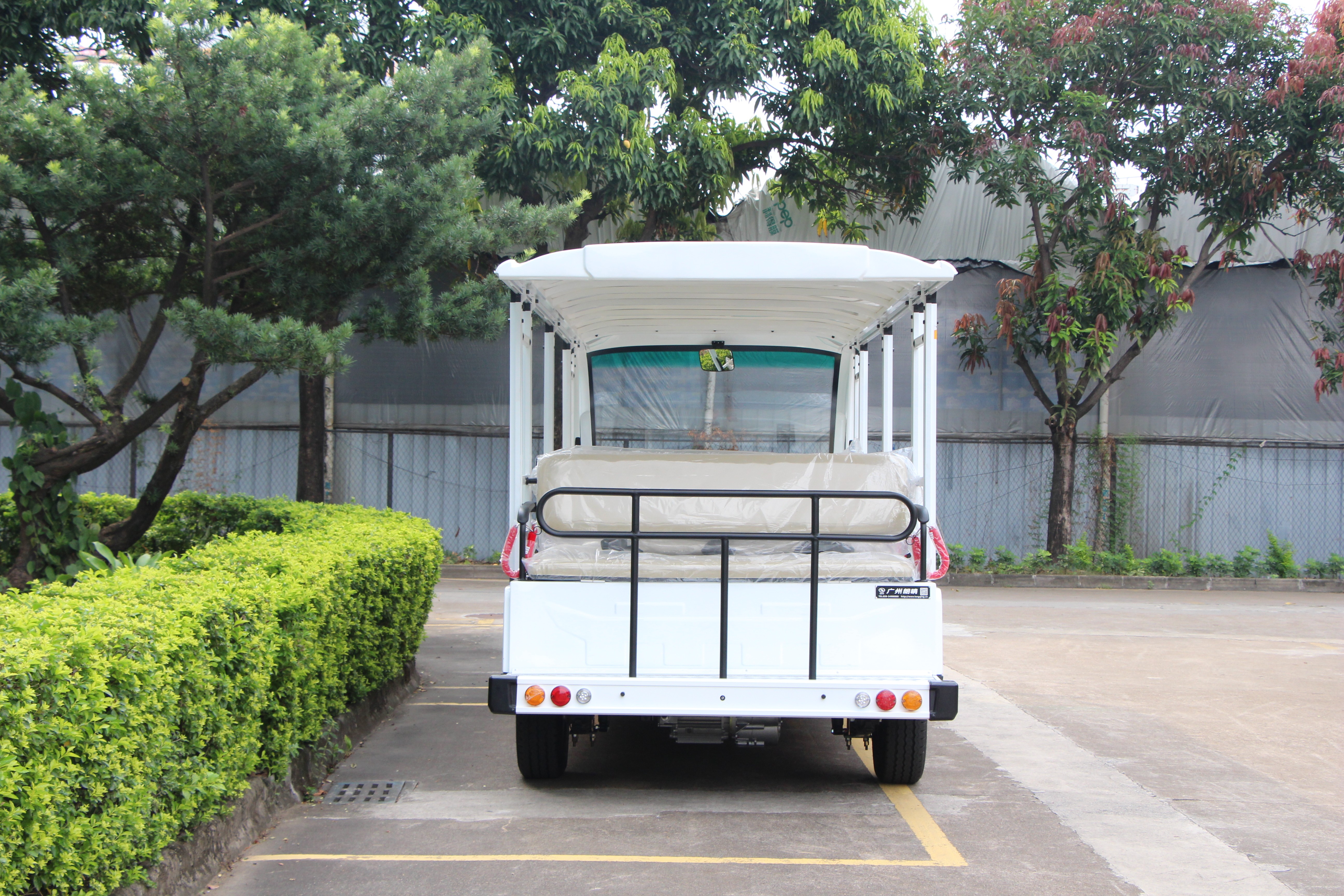
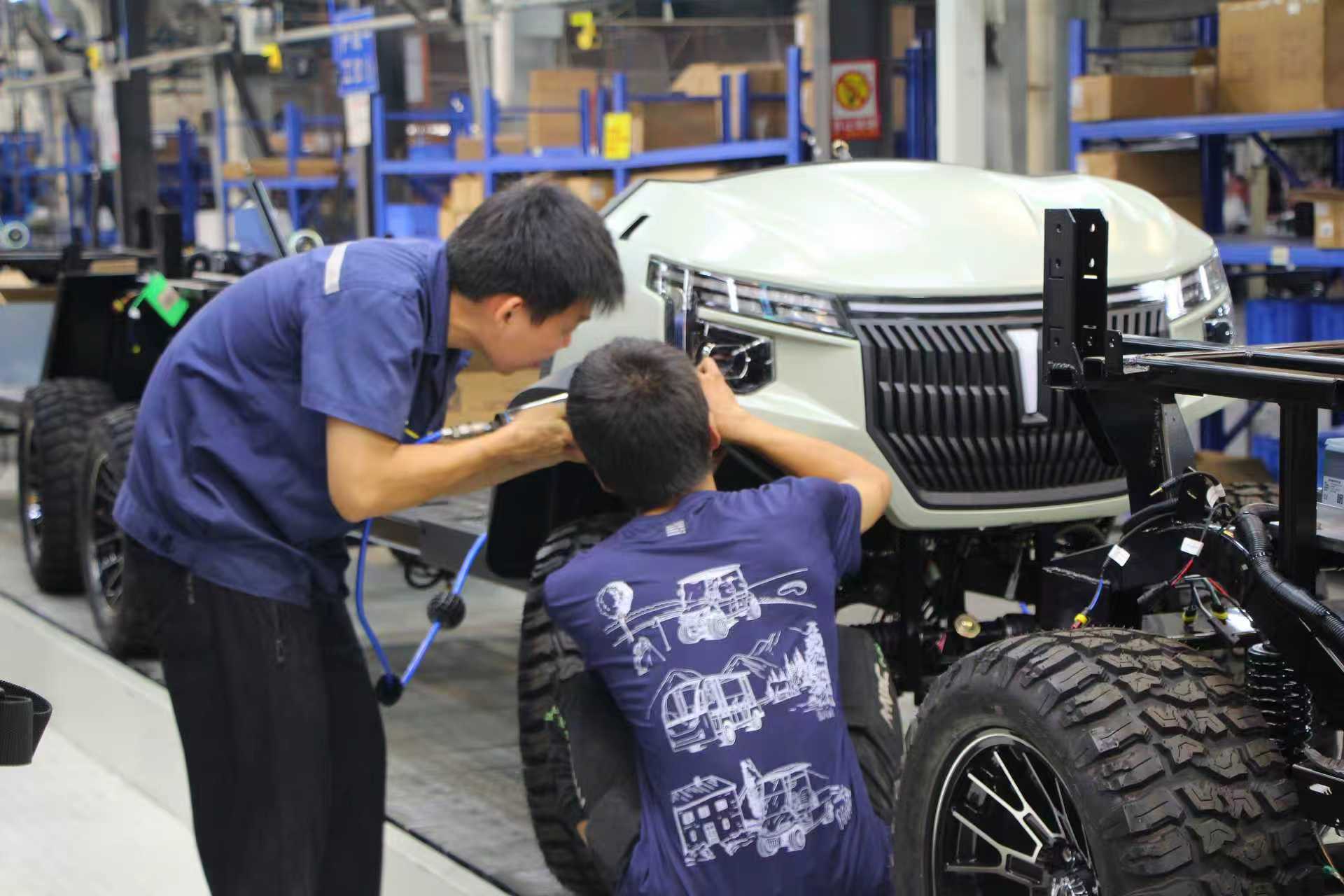
Active driving control relies on power-assisted steering units and standardized braking assemblies. Electric power-assisted steering reduces driver fatigue and prevents over-steering errors during tight turns in high-pedestrian zones. Quality assurance protocols require rigorous pre-delivery validation, including 100% inspection line testing, slope testing, and road testing. Compliance standards, such as EU CE certification (cert numbers 3N250506.GLEDQ43 and 3N250507.GLEDQ77), verify that electrical and mechanical assemblies meet international safety criteria, as seen in municipal fleet deployments across Cuba (over 3,500 units) and Egypt (131 cultural tourism units).
Data/Solution Comparison
| Feature Category | Standard Commercial Bus Spec | Commercial 23Seats Bus (LQV23) |
|---|---|---|
| Seating Capacity | 14 - 18 Passengers | 23 Passengers |
| Chassis Construction | Standard Mild Steel Frame | High-Strength Anti-Rust Steel Structure |
| Body Panel Material | Standard Fiberglass / ABS Plastic | PT + PBT Alloy Injection Molding |
| Suspension Architecture | Rigid Axle with Leaf Springs | MacPherson Independent Front / Leaf-Spring Rear |
| Steering Mechanism | Standard Manual or Hydraulic | Electric Power-Assisted Steering (EPAS) |
| Quality Validation | Sample Batch Testing | 100% Line Inspection, Road Testing, Slope Testing |
Frequently Asked Questions (FAQ)
Q1: Why is MacPherson independent front suspension used on a commercial 23seats bus?
MacPherson independent suspension isolates individual wheel movement on the front axle, preventing road shocks from transmitting across the chassis. This enhances tire contact, steering feedback, and directional control under high passenger volume.
Q2: How does PT+PBT alloy improve vehicle safety compared to traditional body materials?
PT+PBT alloy is an injection-molded engineering blend that offers high impact resistance and elasticity. Unlike rigid fiberglass, it absorbs kinetic energy during low-speed impacts without shattering into dangerous shards.
Q3: What pre-shipment inspections are required to guarantee vehicle operational safety?
Standard quality control requires full inspection line testing, braking distance verification, slope platform tests, and simulated road testing to confirm structural, electrical, and control system integrity prior to delivery.
Final Conclusion & Recommendations
Fleet operators selecting a commercial 23seats bus must analyze safety parameters across chassis load limits, panel impact resistance, and power-assisted steering systems. Choosing vehicles backed by comprehensive production line testing, CE certification, and established international deployment records ensures compliance with high-volume transit demands. Supported by industry-and-trade integrated manufacturing, standard supply options include a 1-year vehicle warranty, sea freight delivery, and standard payment structures with a 30% deposit and balance settled prior to loading. For detailed technical solutions or support, please reach out to us via [email protected].
About Us
Guangzhou Langqing Electric Car CO., LTD. was established in 2000 in the Nansha Economic Development Zone, Guangzhou, operating a 35,000-square-meter production facility with a monthly capacity of 1,000 units. The organization employs 160 personnel, including a 30-member R&D team, 10 testing specialists, and 20 quality control professionals utilizing dedicated slope testing platforms and pre-delivery inspection equipment. Holding ISO9001, ISO14001, ISO10012, ISO45001, and EU CE certifications, the company exports 80% of its production across North America, South America, Europe, the Middle East, Africa, and Southeast Asia.

Lastest
-
How are replacement spare parts provided for a 17seats bus?
2026-08-11 -
What is the typical deposit percentage for a 23seats bus order?
2026-08-11 -
What recyclable components are used in modern golf carts?
2026-08-11 -
What is the warranty policy for air conditioning on 23seats bus?
2026-08-11 -
What battery specs should I check when buying electric golf carts?
2026-08-11
SUBSCRIBE
INQUIRY