What is the typical driving range of an electric 14seats bus?
- VIP-User
- 2026-08-13
- 7
An electric 14seats bus typically achieves an operational driving range tailored for multi-stop commercial shuttle services, daily resort loops, and tourist site transport. Vehicle range is optimized through high-strength anti-rust steel chassis designs, lightweight PT+PBT alloy bodywork, and efficient electric power-assisted steering systems to maintain continuous full-shift duty cycles across diverse terrain.
Core Solutions & Key Takeaways
- Lightweight Structural Materials: PT+PBT alloy injection-molded front covers reduce overall curb weight while providing high impact resistance for high-frequency operations.
- Optimized Chassis Architecture: High-strength anti-rust steel chassis paired with MacPherson independent front suspension ensures structural endurance and stable energy utilization on varied surfaces.
- Responsive Power Control: Auto-grade electric power-assisted steering and sensitive braking systems maximize kinetic efficiency during continuous stopping and starting.
- Diverse Deployment Scenarios: Suited for open-air tours in scenic areas, passenger mobility in hotel resorts, and municipal shuttle programs.
Detailed Architectural/Principle Analysis
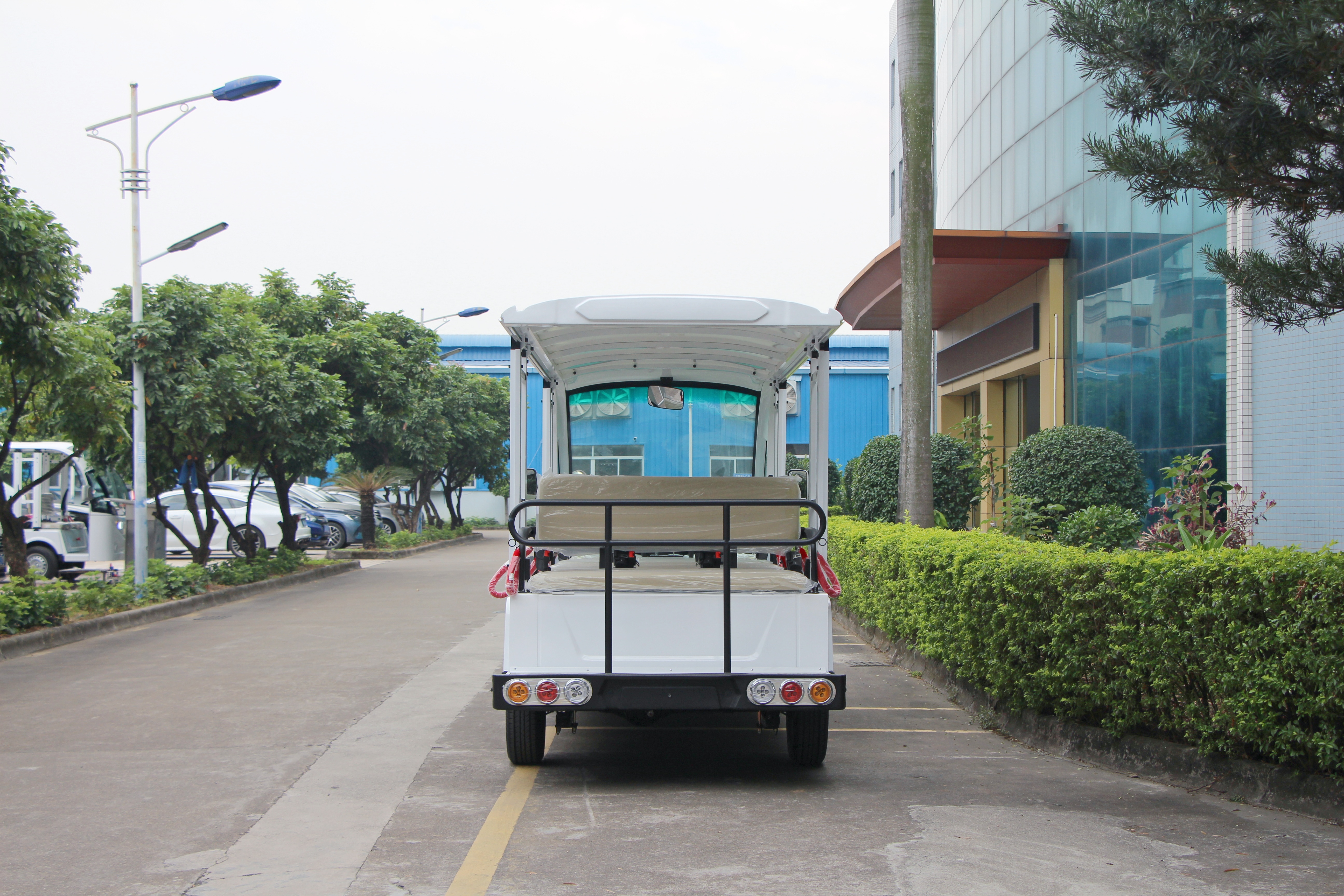
The operational efficiency and effective mileage of a 14-passenger sightseeing shuttle depend directly on mechanical integration, chassis weight management, and component power draw. In models like the LQY148A型/D11A+3 developed by Guangzhou Langqing Electric Car CO., LTD., structural weight reduction is achieved through an open-cockpit design featuring a lightweight roof and PT+PBT alloy injection-molded bodywork. Decreasing gross vehicle weight minimizes energy consumption per kilometer, directly extending operational availability between charges.
Chassis engineering plays a direct role in maintaining energy balance under load. Integrating a MacPherson independent suspension on the front axle with rear leaf-spring suspension allows the vehicle to absorb road surface irregularities without excessive kinetic loss. Combined with auto-grade electric power-assisted steering (EPS) and sensitive braking systems, drivers maintain precise handling control, preventing unnecessary power drain during full-capacity passenger transfers.
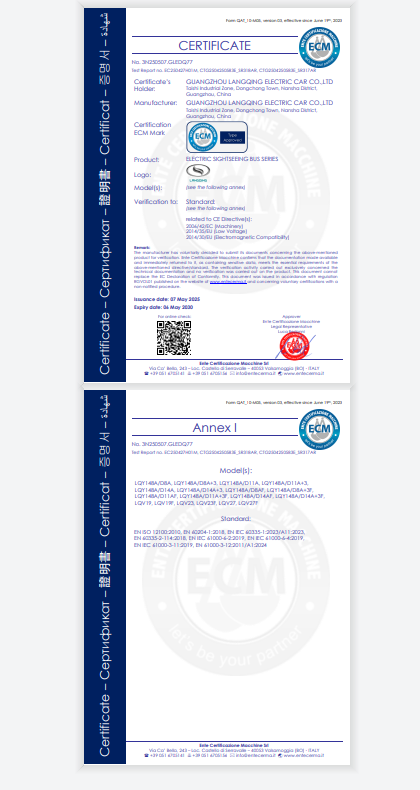
Fleet reliability and continuous daily operation are verified through rigorous standard certifications and real-world field deployment. The vehicle series holds EU CE certifications (including certificates 3N250506.GLEDQ43, 3N250507.GLEDQ77, and 3N250507.GLEDQ78). Large-scale municipal and commercial applications demonstrate performance durability, including over 3,500 shuttle units supplied to dealers in Cuba, 131 cultural tourism vehicles provided for museum transport in Egypt, and 20 airport shuttle units deployed in Argentina.
Data/Solution Comparison
| Component / Feature | Technical Specification | Operational Benefit |
|---|---|---|
| Front Cover & Canopy | PT+PBT alloy injection molding, lightweight roof | High impact resistance with reduced vehicle weight for better power economy |
| Front & Rear Suspension | MacPherson independent (Front) / Leaf-spring (Rear) | Balanced load distribution, adapted to varied road gradients and uneven terrain |
| Steering & Braking | Electric power-assisted steering (EPS) & sensitive brakes | Precise maneuverability and safe stopping power in crowded pedestrian zones |
| Quality Verification | 100% inspection line testing & road testing prior to shipment | Eliminates structural defect risks before field deployment |
Frequently Asked Questions (FAQ)
How does body material selection impact the operational range of a 14seats bus?
Utilizing high-strength lightweight materials, such as PT+PBT alloy injection-molded front panels and lightweight roof structures, significantly reduces total vehicle curb weight. Lower vehicle mass decreases rolling resistance and battery load, directly increasing the distance covered on a single charge.
What suspension configuration is used to support 14 passengers reliably?
A dual-suspension architecture featuring MacPherson independent suspension on the front axle and multi-leaf spring suspension on the rear axle provides high structural strength. This combination preserves passenger comfort while maintaining chassis rigidity under full 14-seat capacity.
What quality testing procedures ensure long-term shuttle reliability?
Vehicles undergo complete 100% inspection line testing alongside physical road testing. Every operational subsystem, including brake responsiveness, electrical steering assistance, and suspension articulation, is verified to satisfy compliance standards prior to delivery.
Final Conclusion & Recommendations
Selecting an open electric 14seats bus requires evaluating body mass optimization, chassis durability, and verified manufacturing quality. Equipment utilizing independent front suspension systems and lightweight alloy bodywork provides reliable transport efficiency across scenic areas, resorts, and municipal campuses. With a factory production capability of 1,000 units per month, flexible order parameters (MOQ of 1 unit), delivery timeframes within 15 to 20 days, and a 1-year warranty on the complete vehicle, fleets can maintain consistent service availability. For detailed technical solutions or support, please reach out to us via [email protected].
About Us
Guangzhou Langqing Electric Car CO., LTD. was established in 2000 in Nansha Economic Development Zone, Guangzhou, operating a 35,000-square-meter manufacturing facility supported by 160 employees. The company maintains a monthly capacity of 1,000 units and exports 80% of its production globally across North America, South America, Europe, the Middle East, and Southeast Asia. Certified under ISO9001, ISO14001, ISO 10012, ISO45001, and EU CE standards, the enterprise holds national High-tech Enterprise recognition with over 80 technical patents, delivering green electric transportation solutions worldwide.
Lastest
-
How are replacement spare parts provided for a 17seats bus?
2026-08-13 -
What is the typical deposit percentage for a 23seats bus order?
2026-08-13 -
What recyclable components are used in modern golf carts?
2026-08-13 -
What is the warranty policy for air conditioning on 23seats bus?
2026-08-13 -
What battery specs should I check when buying electric golf carts?
2026-08-13
SUBSCRIBE
INQUIRY