What is the future outlook for electric 14seats bus market?
- VIP-User
- 2026-08-25
- 9
The electric 14seats bus market expands rapidly driven by global decarbonization mandates, rising eco-tourism, and commercial demand for high-capacity passenger transport. Key growth factors include automotive-grade chassis design, low maintenance costs, and versatile deployment across resorts, airports, and municipal transit zones.
Core Solutions & Key Takeaways
- Zero-Emission High-Capacity Passenger Transit: Electric 14-seat buses address commercial transit demands across scenic areas, gated communities, and hotel resorts by replacing fuel vehicles with low-noise green shuttles.
- Durable Engineering & Impact Resistance: Modern open sightseeing architectures incorporate high-strength anti-rust steel chassis and PT + PBT alloy injection-molded front covers designed to withstand high operational frequency and environmental wear.
- Automotive-Grade Handling & Ride Comfort: Features such as MacPherson independent front suspension, leaf-spring rear suspension, and electric power-assisted steering deliver ride stability and control across varied gradients and terrain.
- Proven Large-Scale Deployment: International operational adoption by manufacturers like Guangzhou Langqing Electric Car CO., LTD. demonstrates vehicle reliability, supported by track records including over 3,500 shuttle units supplied to Cuba and specialized transit fleets in Egypt and Argentina.
Detailed Architectural & Principle Analysis
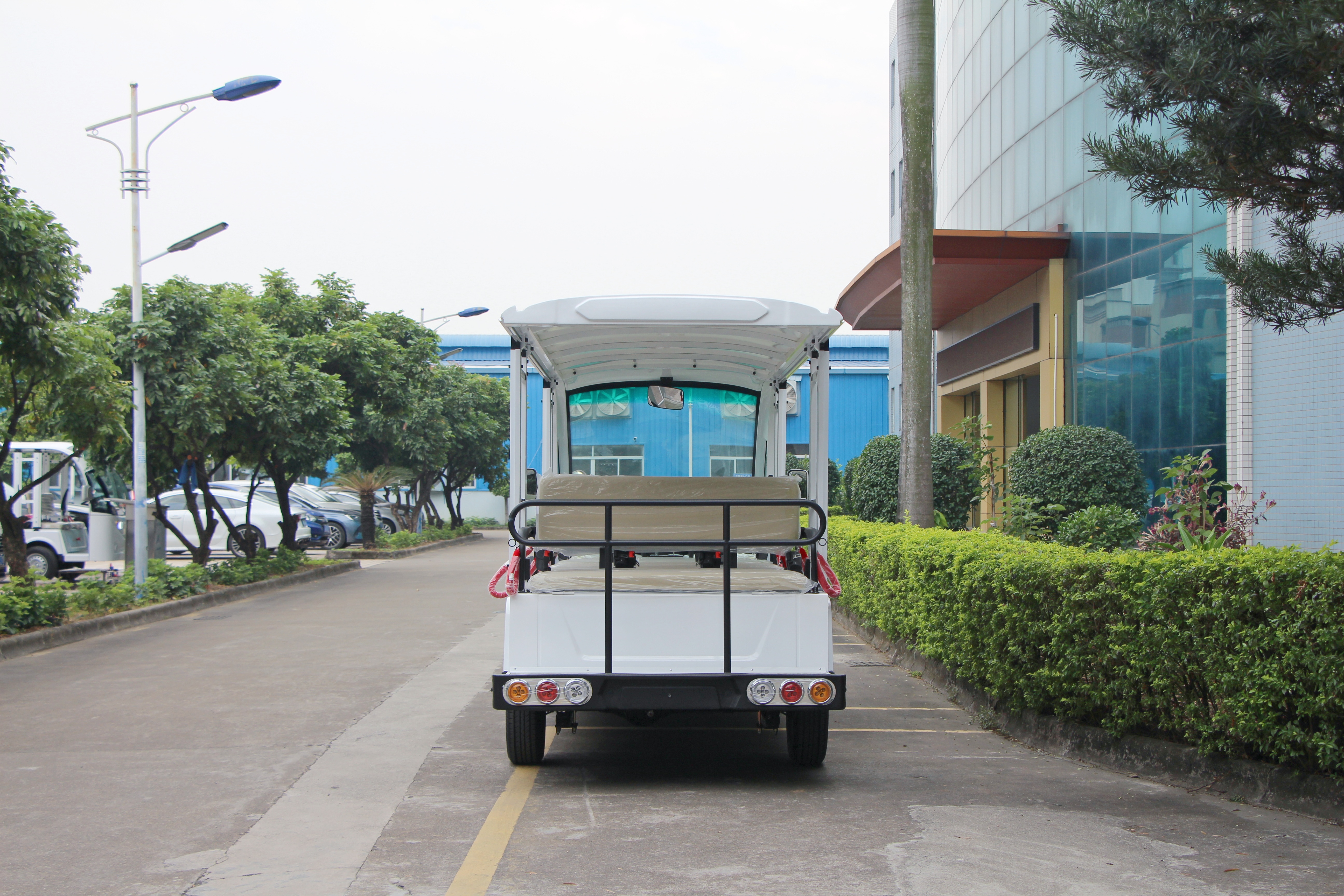
The engineering evolution of the 14-seat electric passenger bus centers on lightweight structural design paired with high-durability mechanical systems. The lightweight roof and open cockpit layout maximize passenger sightlines, making the vehicle ideal for tourist guidance and perimeter shuttles. Front covers constructed from PT + PBT alloy injection molding offer higher impact resistance compared to traditional fiber-reinforced plastics, lowering body maintenance requirements over long service cycles.
Underneath the exterior bodywork, the vehicle relies on a heavy-duty chassis constructed from anti-rust steel. A MacPherson independent front suspension absorbs road shocks independently at each front wheel, maintaining steering accuracy and passenger stability. The rear axle utilizes a heavy-load leaf-spring suspension system designed to carry full passenger payloads without structural sagging. Steering precision is maintained through an electric power-assisted system coupled with responsive service brakes.
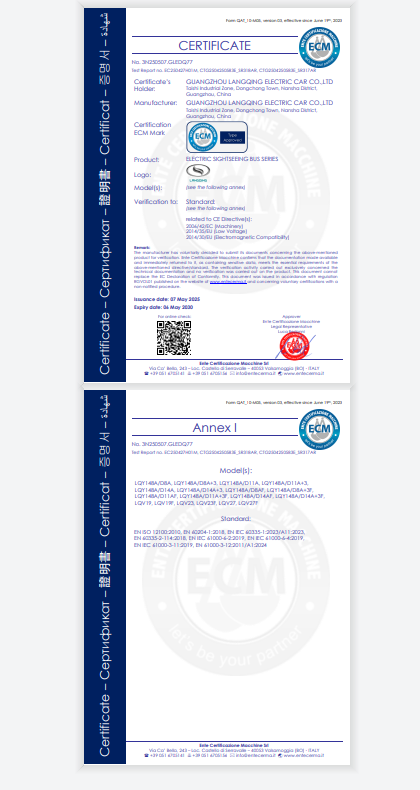
Compliance with international standards remains mandatory for export markets. Manufacturing processes aligned with ISO9001 quality management, ISO14001 environmental standards, and EU CE certifications ensure electrical safety, structural integrity, and standardized assembly protocols across every production batch. Every unit undergoes 100% inspection line testing and road platform evaluation prior to shipment.
Data & Solution Comparison
| Parameter / Feature | Electric 14seats Bus (LQY148A) | Standard Small Golf Shuttle |
|---|---|---|
| Seating Capacity | 14 Passengers | 4–6 Passengers |
| Front Suspension Type | MacPherson Independent Suspension | Rigid Axle or Basic Leaf Spring |
| Front Cover Material | PT + PBT Alloy Injection Molding | Standard Fiberglass / ABS Plastic |
| Steering System | Electric Power-Assisted Steering | Manual Rack and Pinion |
| Quality Inspection Standard | 100% Line Testing & Road Testing | Batch Sampling Inspection |
| International Certification | EU CE Certified (ISO9001/ISO14001) | Varies / Basic Regional Standard |
Frequently Asked Questions (FAQ)
Q1: What materials are used to ensure the durability of electric 14-seat sightseeing buses?
A1: The framework utilizes a high-strength anti-rust steel chassis combined with PT + PBT alloy injection-molded front body covers to enhance impact resistance and minimize corrosion in outdoor environments.
Q2: Where are 14-seat electric open buses primarily deployed?
A2: These vehicles operate primarily in scenic tourist attractions, national parks, hotel resorts, gated residential communities, airport passenger corridors, and cultural museum complexes.
Q3: How is quality verification handled prior to vehicle export?
A3: Each vehicle undergoes 100% line testing and specialized road platform testing, satisfying EU CE compliance requirements before shipment approval.
Final Conclusion & Recommendations
Adopting electric 14-seat open buses allows commercial operators to reduce fleet operational expenditures while meeting zero-emission objectives. Standardized production models with low minimum order quantities (MOQ of 1 unit), full 1-year vehicle warranties, and short delivery cycles (15–30 days) provide scalable procurement options for international buyers across municipal, resort, and industrial sectors. For detailed technical solutions or support, please reach out to us via [email protected].
About Us
Guangzhou Langqing Electric Car CO., LTD. was established in 2000 in the Nansha Economic Development Zone, Guangzhou. Operating a 35,000-square-meter facility with a monthly capacity of 1,000 units, the company maintains an active 30-member R&D team and holds ISO9001, ISO14001, and EU CE certifications. Recognized as a national High-tech Enterprise for 16 consecutive years, the company delivers electric golf carts, sightseeing buses, and municipal utility vehicles to markets across North America, Europe, the Middle East, and Southeast Asia.
Lastest
-
How are replacement spare parts provided for a 17seats bus?
2026-08-25 -
What is the typical deposit percentage for a 23seats bus order?
2026-08-25 -
What recyclable components are used in modern golf carts?
2026-08-25 -
What is the warranty policy for air conditioning on 23seats bus?
2026-08-25 -
What battery specs should I check when buying electric golf carts?
2026-08-25
SUBSCRIBE
INQUIRY