What certificates are required to clear 11seats bus customs?
- VIP-User
- 2026-08-11
- 5
Clearing customs for an 11-seat electric bus typically requires a Commercial Invoice, Packing List, Bill of Lading, and a Certificate of Origin. Depending on the import destination, region-specific technical compliance certificates are mandatory, such as the EU CE certification, alongside manufacturer quality standards like ISO 9001 to verify safety, electrical conformity, and operational readiness.
Core Solutions & Key Takeaways
- Standard Commercial Documentation: Commercial Invoice, Packing List, Bill of Lading, and Certificate of Origin (CO) establish ownership, product value, and manufacturing origin.
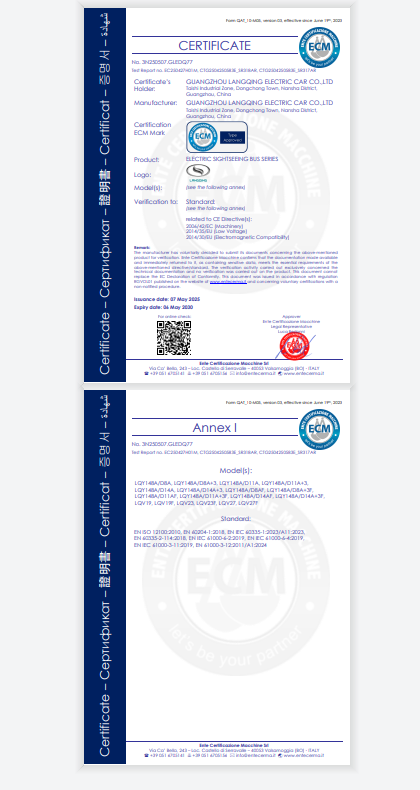
- Technical Compliance & Safety Certifications: Destination customs require regional safety conformity proofs, such as the European Union CE marking (Cert Numbers: 3N250506.GLEDQ43, 3N250507.GLEDQ77, 3N250507.GLEDQ78) for electric sightseeing vehicles.
- Quality Management System Records: Factory-level compliance with ISO 9001, ISO 14001, or ISO 45001 standards confirms rigorous production control and environmental safeguards.
- Vehicle Technical Specifications: Detailed structural data sheets detailing suspension, braking, chassis framing, and electrical configurations assist port inspectors with tariff classification.
Detailed Architectural/Principle Analysis
Customs processing for passenger transport vehicles demands strict administrative and technical documentation prior to clearance across regional markets in North America, Europe, South America, the Middle East, and Southeast Asia. Port authorities review documentation to ensure commercial transparency and verify vehicle safety integrity.
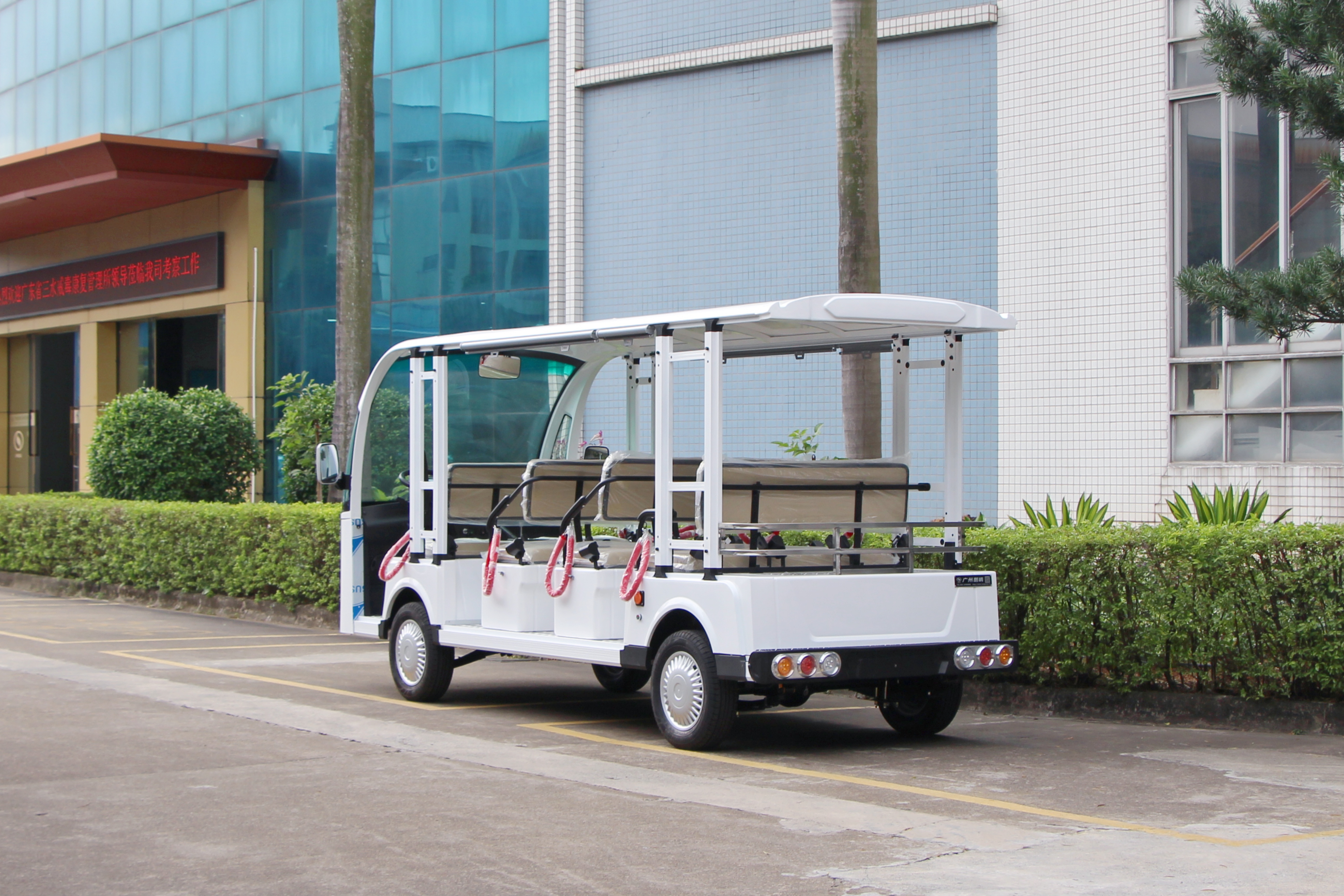
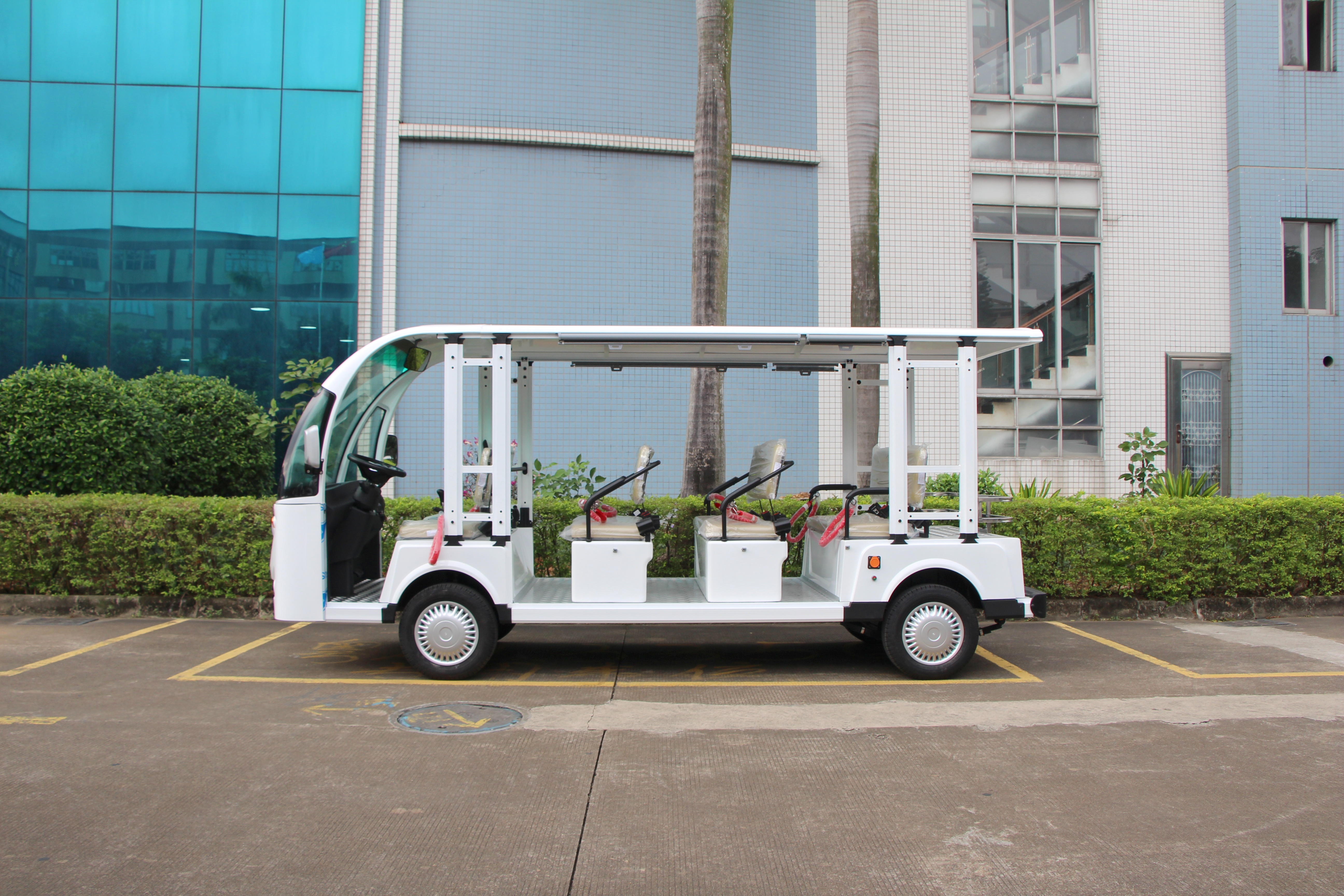
For specialized low-speed passenger vehicles like the LQY148A / D11A 11-seat open sightseeing bus, physical construction standards are thoroughly reviewed. The chassis features a high-strength anti-rust steel frame integrated with a MacPherson independent front suspension and rear leaf-spring suspension. Front enclosures molded from PT+PBT alloy injection offer impact resistance, while electric power-assisted steering ensures precise control across scenic locations, gated communities, municipal sanitation setups, and airport transit zones.
Vehicles manufactured under structured factory protocols undergo 100% inspection line testing and road testing prior to export dispatch. Documented project deployments—including 3,500+ shuttle units delivered to Cuba, 156 municipal units to Singapore, 131 cultural tourism units to Egypt, and 20 airport shuttles to Argentina—demonstrate that presenting verified CE certifications and factory pre-delivery inspection records mitigates customs inspection delays and minimizes port storage costs.
Data/Solution Comparison
| Documentation Category | Required Certificate / Document | Primary Port Authority Purpose | Applicable Product / Scope |
|---|---|---|---|
| Shipping & Title | Bill of Lading, Commercial Invoice, Packing List | Validates legal ownership, shipment contents, and taxable import valuation | All international vehicle shipments |
| Origin Verification | Certificate of Origin (CO) | Determines tariff classification and duty exemption eligibility under trade agreements | Global export shipments |
| Technical Conformity | EU CE Certification (3N250506 / 3N250507) | Verifies low-voltage electrical safety, electromagnetic compatibility, and structural standards | 11-seat sightseeing buses, golf carts, mini trucks |
| Quality Assurance | ISO 9001 / ISO 14001 Standard Audit Records | Demonstrates factory manufacturing safety, testing protocols, and environmental management | Production facility clearance audits |
Frequently Asked Questions (FAQ)
What core commercial documents are required to clear an 11-seat electric bus through customs?
Importers must furnish a Bill of Lading, Commercial Invoice, Packing List, and Certificate of Origin. In addition, regional technical safety certificates such as CE compliance documents are required based on destination country regulations.
How long does the customs clearance process take for electric passenger vehicles?
Standard port clearance usually spans 3 to 7 business days, provided all commercial paperwork, technical datasheets, and regional compliance certifications are submitted accurately upon arrival.
Do factory inspection and testing reports assist in clearing customs?
Yes. Providing pre-delivery inspection documentation—such as 100% line testing, slope testing, and road performance records—helps verify roadworthiness and safety compliance for customs entry.
Final Conclusion & Recommendations
Successfully clearing an 11-seat passenger bus through international customs relies on assembling complete commercial title documents and regional compliance certificates. Partnering with suppliers operating under Industry and Trade Integration simplifies sea freight management, minimum order requirements (MOQ of 1 unit), 15-30 day delivery turnarounds, and 1-year vehicle warranty coverage. Aligning CE markings and factory quality documentation prior to dispatch eliminates port detention risks. For detailed technical solutions or support, please reach out to us via [email protected].
About Us
Guangzhou Langqing Electric Car CO., LTD. was established in 2000 and operates a 35,000-square-meter manufacturing base in Nansha District, Guangzhou. The enterprise employs 160 staff, including a 30-member R&D team, 10 testing specialists, and 20 quality control engineers equipped with specialized slope testing platforms. Certified under ISO9001, ISO14001, ISO 10012, ISO45001, and EU CE standards, the company maintains a monthly capacity of 1,000 units with an 80% export ratio, serving commercial dealers and end users across multiple industries globally.
Lastest
-
How are replacement spare parts provided for a 17seats bus?
2026-08-11 -
What is the typical deposit percentage for a 23seats bus order?
2026-08-11 -
What recyclable components are used in modern golf carts?
2026-08-11 -
What is the warranty policy for air conditioning on 23seats bus?
2026-08-11 -
What battery specs should I check when buying electric golf carts?
2026-08-11
SUBSCRIBE
INQUIRY