Is worker safety equipment mandatory in 17seats bus workshops?
- VIP-User
- 2026-08-12
- 5
Worker safety equipment is strictly mandatory in 17seats bus workshops to fulfill occupational health and safety regulations. Assembly and testing operations involving high-strength anti-rust steel chassis, heavy suspension assemblies, and electric drive components require personal protective equipment (PPE). Technicians must utilize impact-resistant goggles, cut-resistant gloves, steel-toe footwear, and high-voltage electrical protection to mitigate mechanical and electrical hazards during vehicle manufacturing.
Core Solutions & Key Takeaways
- Regulatory Compliance: Industrial safety standards require personal protective equipment (PPE) across all 17seats electric bus production stages, aligning with ISO9001 and EU CE certification requirements.
- Component Handling Safety: Specialized protective equipment minimizes risk during the installation of heavy PT + PBT alloy front covers and high-strength anti-rust steel chassis frames.
- Electrical Risk Mitigation: Insulated safety equipment protects technicians during the wiring and testing of electric power-assisted steering systems and high-voltage drivetrains.
- Quality Control Safety: Standardized safety gear enables technicians to safely perform 100% line testing and slope testing protocols prior to vehicle delivery.
Detailed Architectural/Principle Analysis
Manufacturing a commercial 17seats bus, such as the LQY148A/D14A+3 model, involves structural assembly and mechanical integration. Workshop safety procedures directly correspond to the vehicle's structural components. The open cockpit design relies on a lightweight roof and a front cover made from PT + PBT alloy injection molding, engineered for high impact resistance. During component molding and installation, workers handle large alloy panels that necessitate safety glasses and protective gloves to prevent lacerations and pinch injuries.

The underlying chassis features a high-strength anti-rust steel structure integrated with MacPherson independent front suspension and rear leaf-spring suspension. Assembling these structural systems involves heavy pneumatic tools, overhead hoists, and torque wrenches. Mandating steel-toe boots and protective headwear prevents injuries from suspended loads or dropped tools. Furthermore, configuring the electric power-assisted steering and sensitive braking system requires electrical safety gear to prevent shock hazards during live system diagnostics.
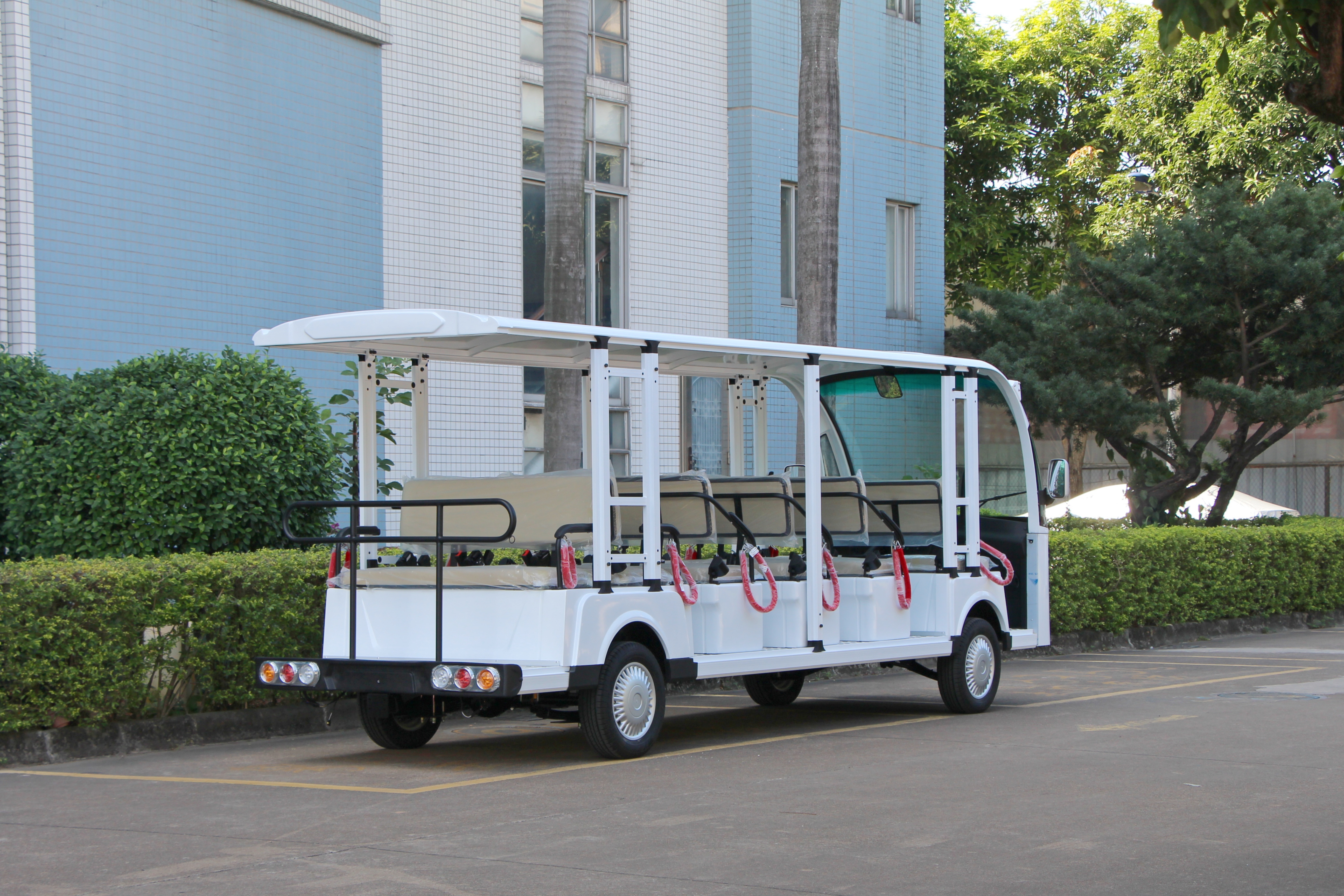
Standardized workshop safety protocols ensure consistency across high-volume production operations. Manufacturers supplying large municipal and commercial orders—such as shuttle fleets deployed in Egypt, Cuba, and Singapore—rely on systematic workshop safety controls to maintain full operational throughput without work-stoppage incidents.
Data/Solution Comparison
| Assembly / Vehicle Feature | Technical Specification | Workshop Safety & PPE Requirement |
|---|---|---|
| Front Cover Integration | PT + PBT alloy injection molding | Cut-resistant safety gloves, impact goggles |
| Chassis Fabrication | High-strength anti-rust steel structure | Steel-toe safety boots, hard hats, heavy-duty work gloves |
| Suspension Fitting | MacPherson independent (Front) / Leaf-spring (Rear) | Pneumatic tool safety guards, foot protection, joint support |
| Steering & Braking Calibration | Electric power-assisted steering, sensitive brakes | High-voltage insulated gloves, arc-flash eye protection |
| Final Quality Inspection | 100% inspection line and road testing | High-visibility safety vests, anti-slip footwear |
Frequently Asked Questions (FAQ)
What personal protective equipment is required for 17seats bus chassis assembly?
Workers assembling the steel chassis structure must wear steel-toe boots, heavy-duty mechanical gloves, and eye protection to protect against falling objects, sharp metallic edges, and high-torque assembly equipment.
Are special safety protocols enforced during electrical system testing?
Yes, testing electric power-assisted steering, battery packs, and vehicle controllers requires certified high-voltage insulated gloves, non-conductive hand tools, and strict lockout/tagout procedures.
How does workshop safety impact pre-delivery testing of 17seats buses?
Comprehensive worker safety gear ensures inspectors can conduct thorough 100% line testing and slope testing without occupational hazards, maintaining strict quality control standards prior to sea freight shipment.
Final Conclusion & Recommendations
Mandatory worker safety equipment in 17seats bus workshops protects personnel while ensuring strict compliance with high-volume manufacturing standards. Implementing standardized safety protocols supports an efficient 15-20 day delivery timeline and monthly production capacities reaching 1,000 units. Products supported by an industry and trade integration business model come with a 1-year whole vehicle warranty, backed by 30% deposit and balance before loading payment terms. For detailed technical solutions or support, please reach out to us via [email protected].
About Us
Guangzhou Langqing Electric Car CO., LTD. was established in 2000 in Nansha District, Guangzhou, operating a 35,000-square-meter manufacturing facility with 160 employees. Supported by a 30-member research and development team, the enterprise maintains a monthly capacity of 1,000 units and holds ISO9001 and EU CE certifications. The company specializes in green electric vehicle solutions and has served clients across multiple industries globally.
Lastest
-
How are replacement spare parts provided for a 17seats bus?
2026-08-12 -
What is the typical deposit percentage for a 23seats bus order?
2026-08-12 -
What recyclable components are used in modern golf carts?
2026-08-12 -
What is the warranty policy for air conditioning on 23seats bus?
2026-08-12 -
What battery specs should I check when buying electric golf carts?
2026-08-12
SUBSCRIBE
INQUIRY