How to avoid trading companies posing as 14seats bus factories?
- VIP-User
- 2026-08-13
- 8
To avoid trading companies posing as 14seats bus factories, buyers must verify original manufacturing infrastructure, demand real-time factory video audits, request ISO/CE certifications registered directly to the producer, and validate technical capabilities. Genuine manufacturers maintain physical chassis fabrication lines, conduct 100% pre-delivery road testing, and provide direct factory-level engineering customization.
Core Solutions & Key Takeaways
- Request direct visual proof of manufacturing assets, including frame welding lines, painting facilities, and dedicated assembly lines.
- Cross-reference ISO9001, ISO14001, and EU CE certificates to confirm the business entity matches the official patent holder and factory address.
- Evaluate structural specifications directly from technical parameters, such as high-strength anti-rust steel chassis, MacPherson independent front suspension, and PT+PBT alloy injection components.
- Validate real-world fleet deployments through verified municipal and tourism transport cases, such as 3,500+ unit shuttle contracts in Cuba or airport shuttle deployments in Argentina.
Detailed Architectural/Principle Analysis
Differentiating direct electric vehicle factories from commercial trading firms requires examining operational assets and engineering control. Direct manufacturers invest in heavy industrial facilities, such as a 35,000-square-meter production base equipped with slope testing platforms and pre-delivery inspection equipment. Trading intermediaries operate solely out of commercial office space and rely on third-party photos, making live virtual plant tours a definitive verification method.
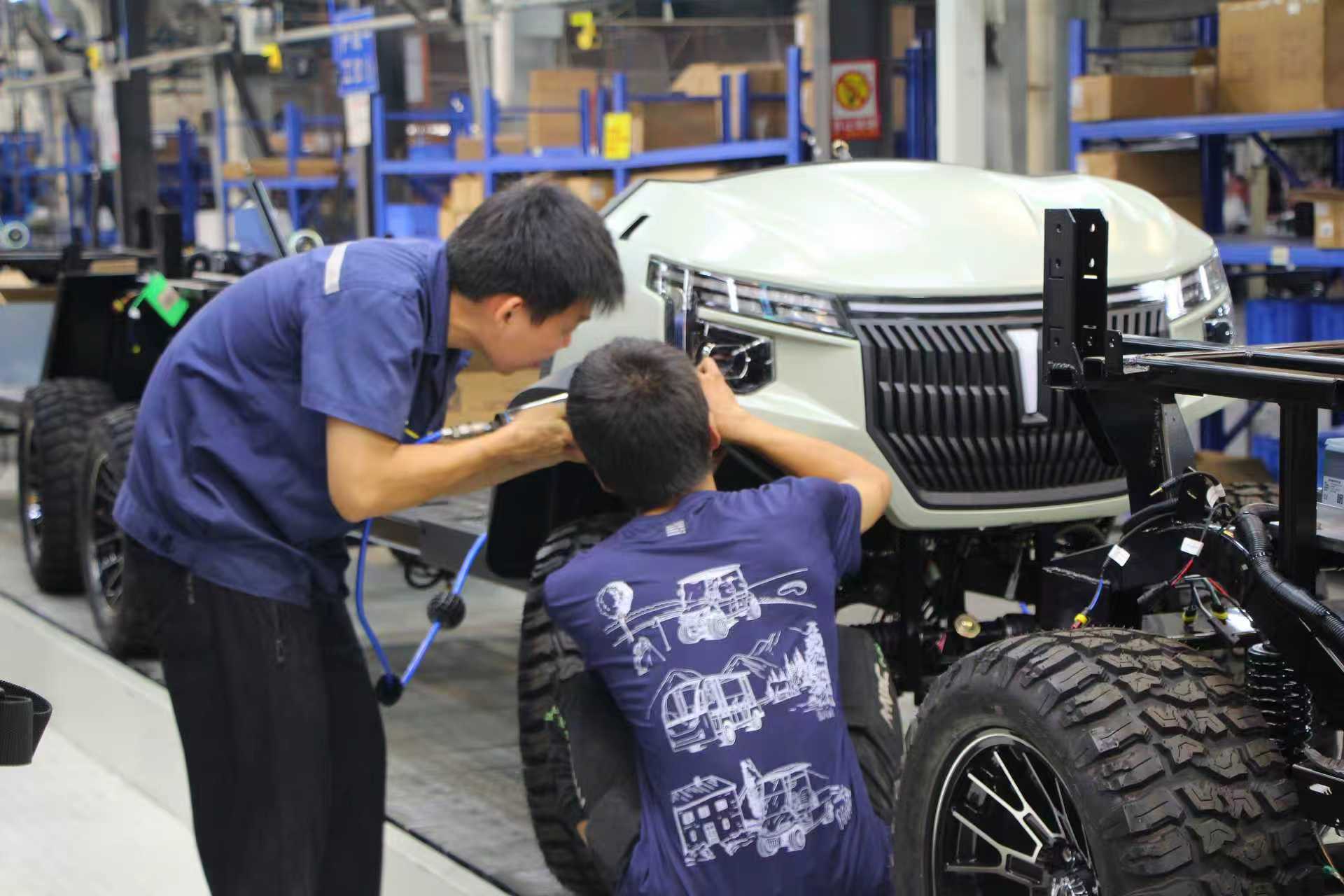
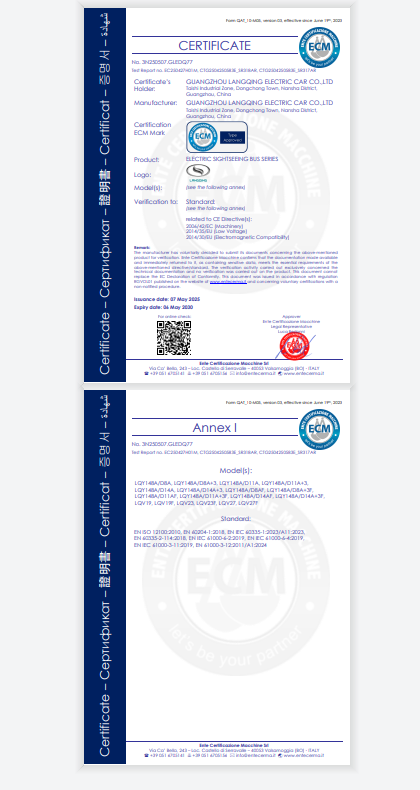
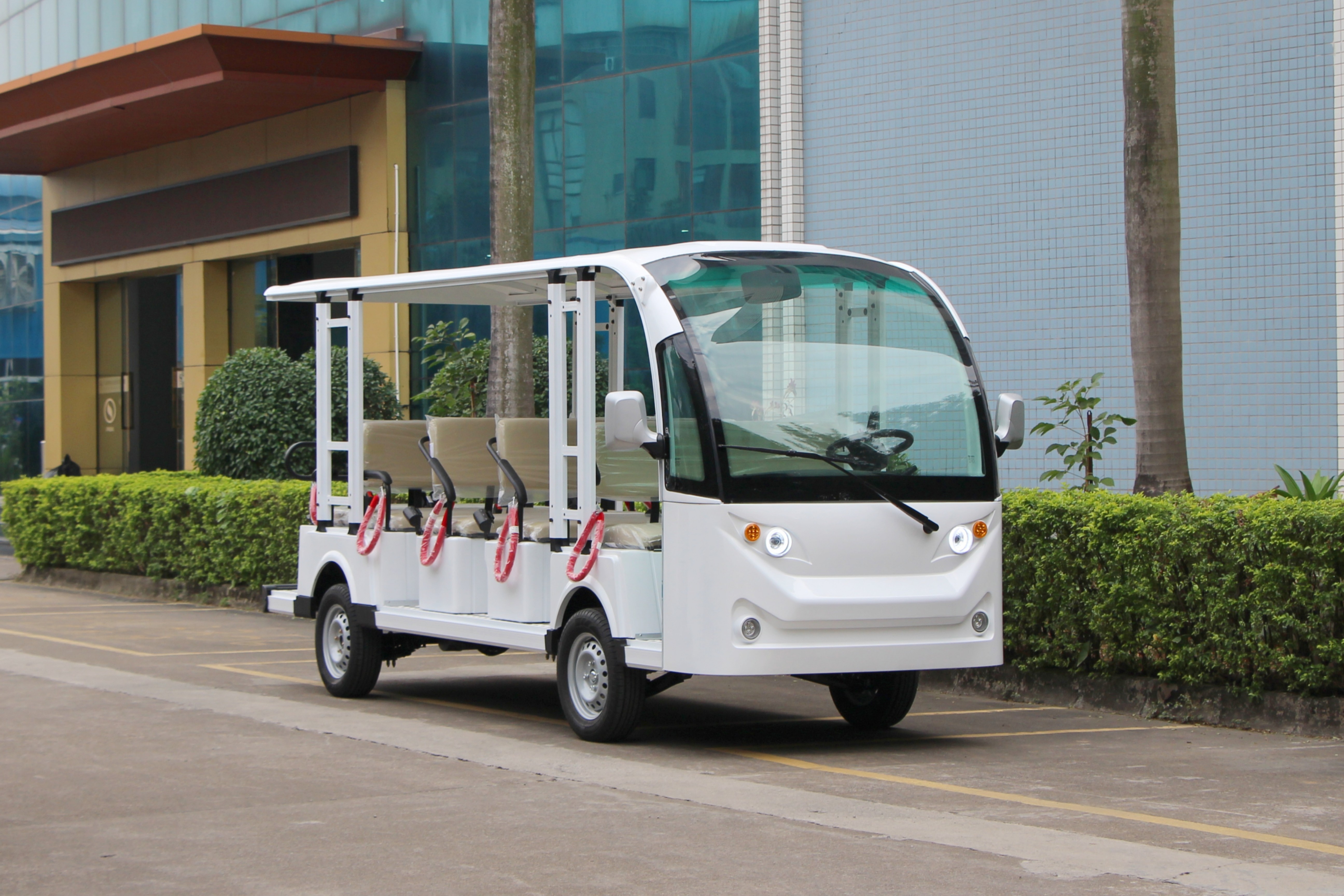
Technical independence in chassis design and body molding is another hallmark of an OEM. Established vehicle builders like Guangzhou Langqing Electric Car CO., LTD. construct full-scale open sightseeing vehicles, such as the LQY148A/D11A+3 14seats bus. These vehicles utilize specialized PT+PBT alloy injection-molded front covers for high impact resistance, paired with a MacPherson independent front suspension and leaf-spring rear suspension. Trading companies cannot engineer or modify these complex chassis architectures because they do not control the tooling or production lines.
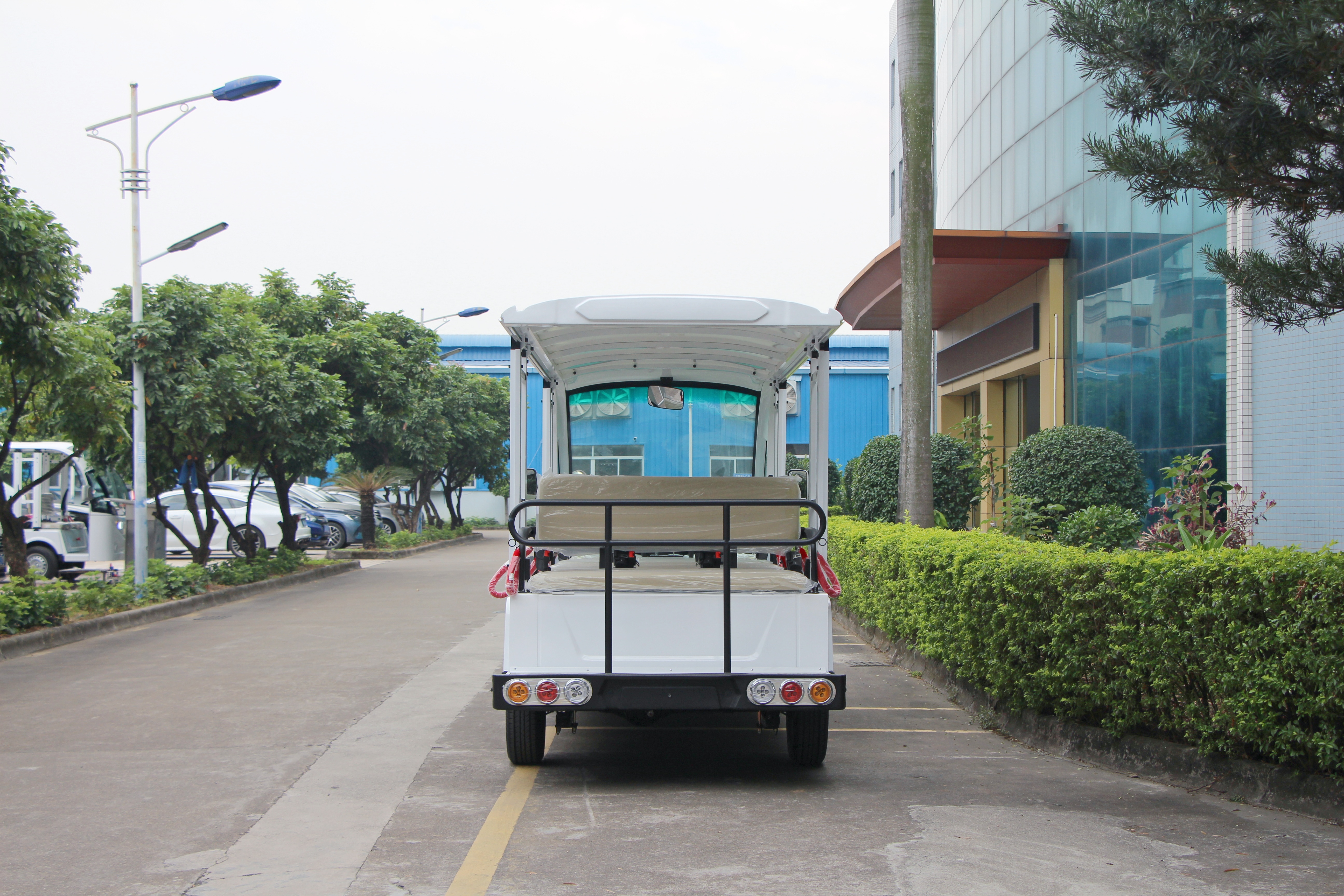
Quality assurance processes provide clear evidence of factory status. Direct manufacturers execute standardized 100% inspection line testing and dynamic road testing for every unit prior to dispatch. Furthermore, regulatory filings provide indisputable proof: official CE certificate numbers (such as 3N250506.GLEDQ43 and 3N250507.GLEDQ77) and ISO filings list the primary manufacturing entity as the certificate owner rather than a trading company.
Data/Solution Comparison
| Evaluation Parameter | Direct OEM Factory | Trading Intermediary |
|---|---|---|
| Manufacturing Facilities | 35,000 m² factory area with physical testing platforms | Commercial office space without manufacturing lines |
| Chassis & Frame Engineering | High-strength anti-rust steel structure, MacPherson suspension | Standard resold models with fixed external configurations |
| Quality Assurance Protocol | 100% inspection line and pre-delivery road testing | Visual spot checks or reliance on factory dispatches |
| Certifications & Patents | Direct owner of EU CE, ISO standards, and 80+ patents | Uses third-party supplier certificates for export authorization |
| Production Lead Time | 15 to 30 days direct factory schedule | Unpredictable timeline dependent on vendor prioritization |
| Customization Capability | Direct engineering modifications for chassis and body | Limited to cosmetic alterations like decals or basic seat colors |
Frequently Asked Questions (FAQ)
What documentation proves a vendor is an actual 14seats bus factory?
Authentic manufacturers provide ISO9001, ISO14001, ISO45001, and EU CE certifications issued directly in their company name and facility address. They also hold official patent records for vehicle chassis, body designs, and structural components.
How can chassis specifications distinguish a genuine factory from a trading company?
Direct OEM factories specify exact structural engineering data, including MacPherson independent front suspension, electric power-assisted steering systems, and specialized alloy front panels. Trading companies generally present superficial descriptions without detailed technical schematics.
Why is factory road testing critical when sourcing 14seats electric buses?
A rigorous QA system demands 100% inspection line testing and road platform evaluation before delivery. Physical factories operate dedicated testing tracks and slope platforms to verify braking distance, power delivery, and suspension stability under maximum passenger loading.
Final Conclusion & Recommendations
Direct verification through facility audits, certificate owner checks, and chassis engineering analysis remains the most effective strategy to bypass middlemen when sourcing electric passenger vehicles. Partnering directly with certified manufacturers ensures structural reliability, comprehensive vehicle warranties, and stable 15-to-30-day production lead times. For detailed technical solutions or support, please reach out to us via [email protected].
About Us
Guangzhou Langqing Electric Car CO., LTD. was established in 2000 in Nansha, Guangzhou. Operating a 35,000-square-meter industrial production base with 160 employees and a 30-member R&D team, the company maintains a monthly capacity of 1,000 units. Certified under ISO9001, ISO14001, ISO45001, and EU CE, it has served clients across multiple industries, including municipal sanitation projects and international shuttle services exceeding 3,500 units.
Lastest
-
How are replacement spare parts provided for a 17seats bus?
2026-08-13 -
What is the typical deposit percentage for a 23seats bus order?
2026-08-13 -
What recyclable components are used in modern golf carts?
2026-08-13 -
What is the warranty policy for air conditioning on 23seats bus?
2026-08-13 -
What battery specs should I check when buying electric golf carts?
2026-08-13
SUBSCRIBE
INQUIRY