How durable is the braking system on a daily 14seats bus fleet?
- VIP-User
- 2026-08-12
- 9
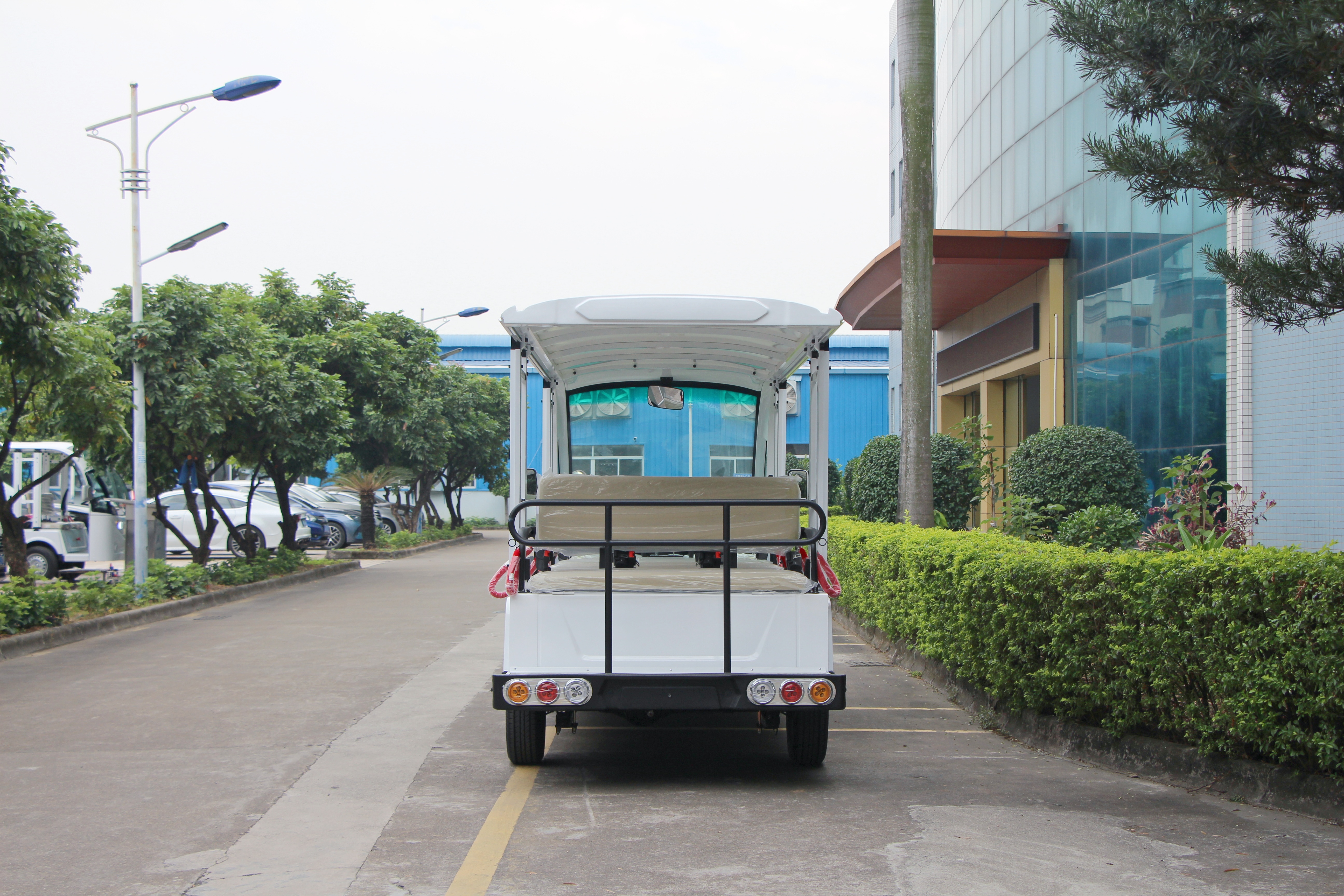
The braking system on a daily 14seats bus fleet demonstrates high durability through sensitive automotive-grade responsiveness integrated with a high-strength anti-rust steel chassis. Engineered with MacPherson front independent suspension and rear leaf-spring suspension, the system maintains consistent stopping power, minimal component wear, and reliable operation under continuous daily passenger transport cycles across diverse terrain conditions.
Core Solutions & Key Takeaways
- Automotive-Grade Sensitivity: Equipped with sensitive braking controls and electric power-assisted steering, ensuring immediate response and low mechanical friction under full passenger capacity.
- Structural Rigidity: The chassis utilizes a high-strength anti-rust steel structure that prevents frame deformation, preserving mechanical alignment across the brake calipers and rotors.
- Optimized Axle Dynamics: Combining MacPherson independent front suspension with rear leaf-spring suspension balances dynamic loads, reducing uneven tire and brake wear during repetitive shuttle cycles.
- Rigorous Testing Standard: Every unit undergoes 100% inspection line testing and road testing prior to dispatch to verify braking torque and systemic stability.
- Application Versatility: Tailored for high-frequency operations in scenic areas, tourist attractions, resorts, hotels, and airport shuttle routes.
Detailed Architectural/Principle Analysis
Braking system longevity in commercial passenger fleets depends on the integration of chassis architecture, weight distribution, and component manufacturing standards. The LQY148A 14seats bus addresses mechanical strain by combining automotive-grade braking components with an electric power-assisted steering system. This setup reduces physical operator effort while delivering consistent hydraulic pressure across all four wheel positions during frequent stop-and-go operations.
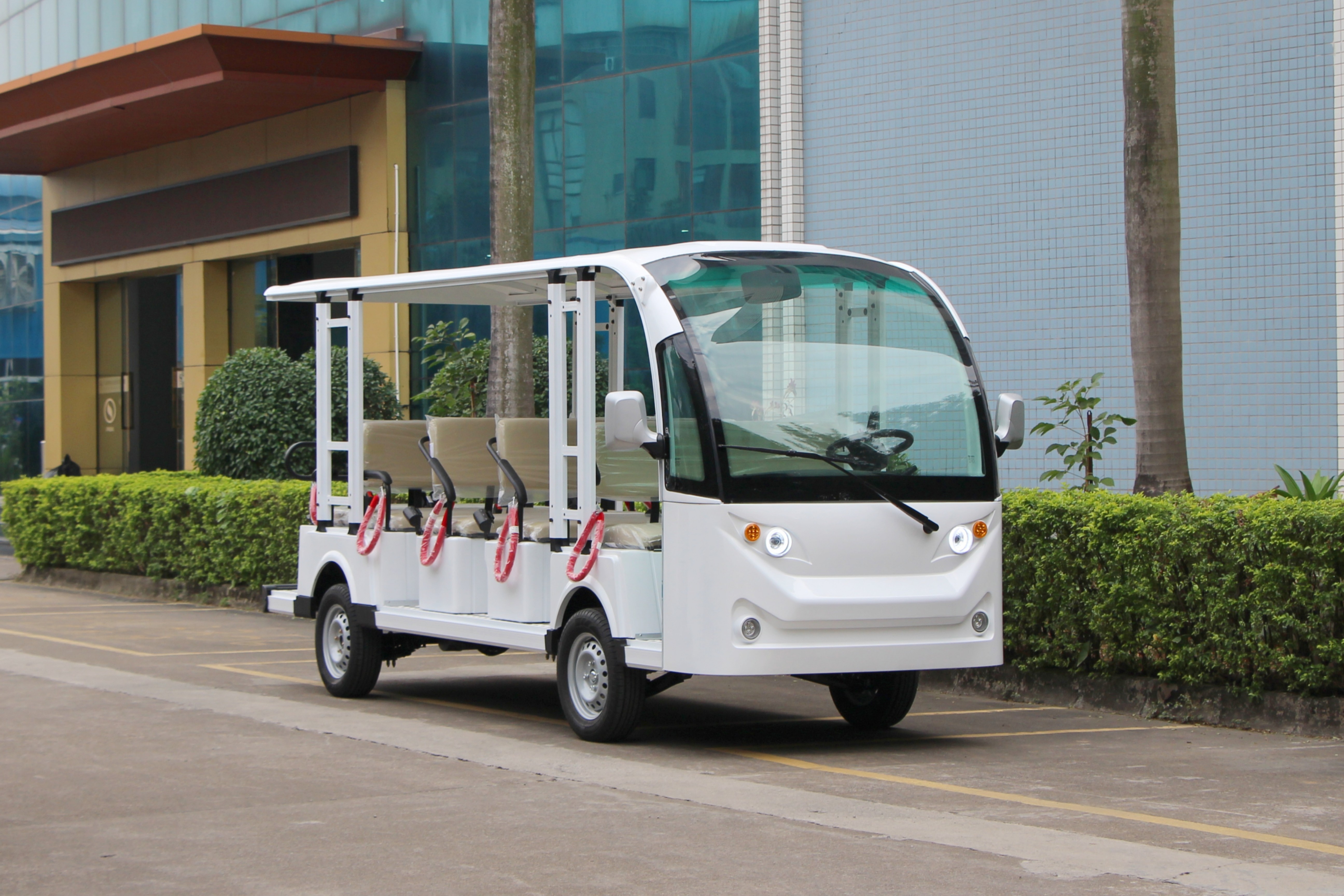
The physical structure directly protects brake system components from premature degradation. Featuring a high-strength anti-rust steel chassis, the platform resists environmental corrosion from coastal humidity or rain exposure. The body utilizes a PT + PBT alloy injection-molded front cover, providing impact resistance that safeguards front-end steering and braking links against road debris.
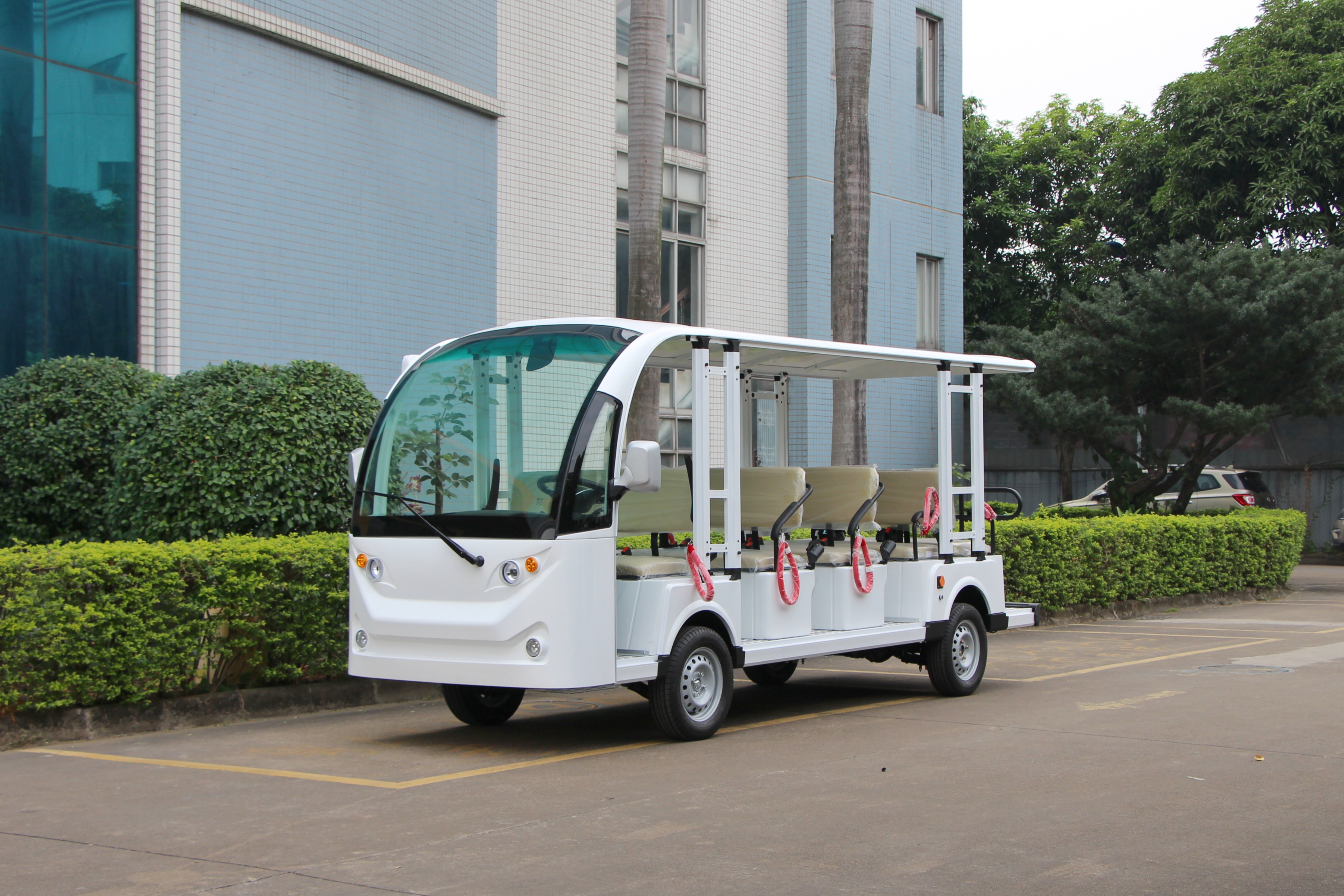
Suspension engineering further enhances brake component longevity. The front axle incorporates a MacPherson independent suspension that absorbs lateral shocks and prevents localized stress on brake calipers. The rear axle relies on a heavy-duty leaf-spring suspension engineered to carry 14 passengers without bottoming out, maintaining equal weight distribution over the rear braking assemblies.
Operational reliability across global deployment validates this mechanical configuration. With official EU CE certifications (including certificates 3N250506.GLEDQ43, 3N250507.GLEDQ77, and 3N250507.GLEDQ78), the platform supports major international transit projects. Large-scale deployments include 3,500+ shuttle units operating in Cuba, 131 cultural tourism vehicles supplied to Egypt, 156 municipal units in Singapore, and 20 airport shuttle buses operating in Argentina.
Data/Solution Comparison
| Parameter / Specification | LQY148A 14-Seat Sightseeing Bus | Standard Fleet Sightseeing Bus |
|---|---|---|
| Chassis Construction | High-strength anti-rust steel structure | Standard painted carbon steel frame |
| Front Axle Suspension | MacPherson independent suspension | Rigid beam / standard leaf-spring |
| Rear Axle Suspension | Heavy-duty leaf-spring suspension | Standard multi-leaf spring setup |
| Steering System | Electric power-assisted steering (EPS) | Manual or standard hydraulic steering |
| Body Shell Material | PT + PBT alloy injection-molded cover | Fiberglass / FRP material |
| Quality Assurance Standard | 100% inspection line and road testing | Random sample batch inspection |
Frequently Asked Questions (FAQ)
Q1: How does the chassis structure influence braking system lifespan?
A1: A high-strength anti-rust steel chassis prevents torsional twisting under heavy loads. Maintaining frame rigidity keeps the brake calipers, discs, and wheel hubs properly aligned, preventing localized friction and uneven pad wear.
Q2: What suspension setup best preserves brake components on a 14seats bus?
A2: A dual-setup utilizing MacPherson independent front suspension isolates vibration from the steering and braking linkages, while a robust rear leaf-spring suspension manages passenger weight, ensuring consistent stopping distances and predictable pad wear.
Q3: What quality control processes verify braking safety before shipment?
A3: Each vehicle undergoes 100% inspection line testing alongside active road testing. Brake force balance, emergency stopping distance, and power-assist responsiveness are fully measured and approved prior to delivery.
Final Conclusion & Recommendations
For resort operators, municipal transport authorities, and commercial fleet managers seeking low-maintenance passenger transit, selecting a 14seats bus with automotive-grade braking and independent suspension significantly lowers lifecycle operating costs. Operating under an Industry and Trade Integration model with a monthly capacity of 1,000 units and standard delivery times of 15–30 days, vehicles are backed by a full 1-year whole-vehicle warranty and complete technical support. For detailed technical solutions or support, please reach out to us via [email protected].
About Us
Guangzhou Langqing Electric Car CO., LTD. was established in 2000 in Nansha Economic Development Zone, Guangzhou, operating within a dedicated industrial park. As a national High-tech Enterprise for 16 consecutive years with over 80 technical patents, the company maintains a 30-member R&D team, 10-member testing team, and 20-member quality control team operating advanced slope and pre-delivery inspection platforms. Certified under ISO9001, ISO14001, ISO10012, ISO45001, and EU CE standards, the manufacturer delivers electric sightseeing buses, golf carts, and mini utility trucks to commercial clients across North America, South America, Europe, the Middle East, Africa, and Southeast Asia.
Lastest
-
How are replacement spare parts provided for a 17seats bus?
2026-08-12 -
What is the typical deposit percentage for a 23seats bus order?
2026-08-12 -
What recyclable components are used in modern golf carts?
2026-08-12 -
What is the warranty policy for air conditioning on 23seats bus?
2026-08-12 -
What battery specs should I check when buying electric golf carts?
2026-08-12
SUBSCRIBE
INQUIRY