How do you test chassis structural strength in 17seats bus manufacturing?
- VIP-User
- 2026-08-14
- 8
Testing chassis structural strength in 17seats bus manufacturing involves rigorous pre-delivery line testing, high-load platform stress analysis, and slope testing. Manufacturers evaluate load distribution across high-strength anti-rust steel frames combined with MacPherson independent front suspensions and leaf-spring rear suspensions. Comprehensive road inspections verify structural rigidity, impact resistance, and torsional stability under maximum weight capacities prior to final vehicle distribution.
Core Solutions & Key Takeaways
- High-Strength Steel Frame Stress Verification: Anti-rust chassis structures undergo static load stress testing to maintain frame integrity across varied topographies.
- Dual-Suspension Dynamic Load Distribution: Integration of MacPherson independent front suspensions and leaf-spring rear suspensions requires dynamic axle load balance verification.
- 100% Pre-Delivery Road & Line Inspection: Dedicated inspection line testing and slope testing validate torsional rigidity, braking response, and power-assisted steering stability.
- Application Adaptability: Verified structural designs support continuous operation across scenic areas, resort shuttle networks, and municipal transport hubs.

Detailed Architectural/Principle Analysis
Chassis structural testing for open sightseeing passenger vehicles, such as the 17seats bus model LQY148A, focuses on frame load endurance, suspension shock absorption, and material impact resistance. The underlying chassis structure utilizes high-strength anti-rust steel designed to resist environmental wear and structural deformation. The front cover integrates PT + PBT alloy injection molding to deliver impact resistance while minimizing unnecessary front-end weight.
Engineers at Guangzhou Langqing Electric Car CO., LTD. employ specific testing equipment to measure physical tolerances. The testing setup includes 3 sets of R&D testing equipment, 4 sets of pre-delivery inspection equipment, and 3 sets of slope test platforms. Every vehicle undergoes 100% inspection line testing and road testing to confirm structural stability before shipment approval.
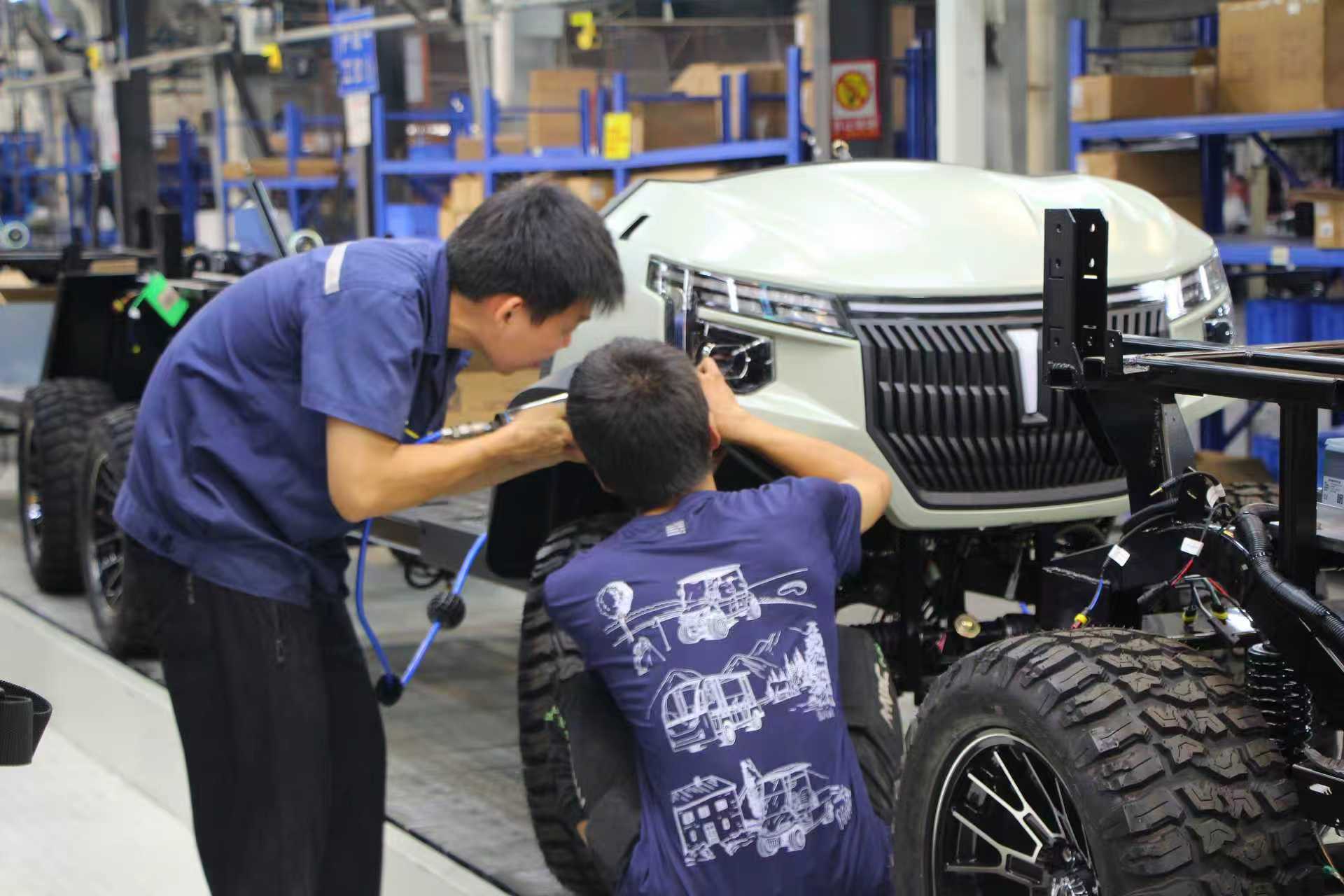
Suspension alignment directly influences dynamic structural load. The front axle utilizes a MacPherson independent suspension system to absorb single-wheel shocks and isolate frame stress, while the rear axle utilizes a heavy-duty leaf-spring suspension to handle high passenger loads. Combined with sensitive braking and electric power-assisted steering, full-vehicle stress testing confirms structural control across steep slopes and rough pavement.
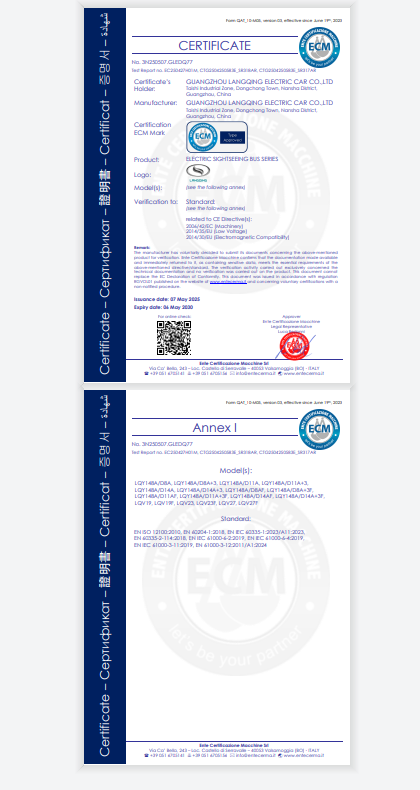
Manufacturing compliance is substantiated through international certifications, including EU CE approval (Certificates 3N250506.GLEDQ43, 3N250507.GLEDQ77, 3N250507.GLEDQ78) alongside ISO9001, ISO14001, ISO10012, and ISO45001 management systems. Fleet reliability under real operational conditions is demonstrated by global shuttle deployments, including over 3,500 shuttle bus units delivered to Cuba, 156 municipal units in Singapore, and 131 tourism vehicles in Egypt.
Data/Solution Comparison
| Chassis Structural Feature | Technical Design Specification | Strength & Quality Test Method |
|---|---|---|
| Main Frame Assembly | High-strength anti-rust steel chassis | Static stress load testing and platform verification |
| Front Axle Suspension | MacPherson independent suspension | Dynamic impact resistance and alignment testing |
| Rear Axle Suspension | Leaf-spring heavy-duty suspension | Maximum payload road endurance testing |
| Front Body Shell | PT + PBT alloy injection molding | Laboratory impact resistance evaluation |
| Vehicle Control & Safety | Electric power-assisted steering and sensitive brakes | 100% inspection line and slope test platform analysis |
Frequently Asked Questions (FAQ)
How are chassis frames protected against corrosion during manufacturing?
Chassis frames utilize high-strength anti-rust steel structures designed to resist atmospheric corrosion and surface degradation across humid coastal and resort environments.
What role does slope platform testing play in chassis verification?
Slope test platforms evaluate frame stress distribution, parking brake holding force, and steering responsiveness while the vehicle operates under maximum passenger weight on steep gradients.
What quality assurance processes occur prior to shipment?
Every unit completes a 100% inspection line test and physical road test using dedicated pre-delivery inspection equipment; only fully qualified units receive authorization for delivery.
Final Conclusion & Recommendations
Validating chassis structural strength requires combining high-strength anti-rust frame construction with dynamic testing protocols. Utilizing specialized slope platforms, inspection lines, and combined suspension systems ensures high load capacity and operational safety. Supported by an Industry and Trade Integration business model, orders are fulfilled with a minimum order quantity (MOQ) of 1 unit, typical delivery times of 15 to 30 days via sea freight, and a 1-year whole vehicle warranty. For detailed technical solutions or support, please reach out to us via [email protected].
About Us
Guangzhou Langqing Electric Car CO., LTD. was established in 2000 in Nansha District, Guangzhou, operating a 35,000-square-meter industrial facility. The company houses 160 employees, including a 30-member R&D team and a 20-member quality control team. Producing up to 1,000 units per month with an 80% export ratio, the enterprise manufactures electric golf carts, sightseeing buses, and mini trucks for global markets in North America, South America, Europe, the Middle East, Africa, and Southeast Asia. Recognized as a national High-tech Enterprise for 16 consecutive years, the company maintains ISO9001, ISO14001, ISO10012, ISO45001, and EU CE certifications.

Lastest
-
How are replacement spare parts provided for a 17seats bus?
2026-08-14 -
What is the typical deposit percentage for a 23seats bus order?
2026-08-14 -
What recyclable components are used in modern golf carts?
2026-08-14 -
What is the warranty policy for air conditioning on 23seats bus?
2026-08-14 -
What battery specs should I check when buying electric golf carts?
2026-08-14
SUBSCRIBE
INQUIRY