How are electric golf carts packed for safe ocean transport?
- VIP-User
- 2026-08-12
- 6
Electric golf carts are packed for safe ocean transport using fully assembled (CBU) or semi-knocked-down (SKD) steel-framed crates secured inside sea freight containers. Vehicles are anchored with heavy-duty tie-down straps, wheel chocks, and anti-corrosive protective covers to prevent movement, moisture ingress, and structural damage caused by ocean pitching and salt air exposure.
Core Solutions & Key Takeaways
- Structural Chassis Anchoring: Vehicles equipped with electrophoretic metal chassis and composite bodies are strapped directly to steel support frames or container floor D-rings to withstand maritime motion.
- Corrosion and Environmental Shielding: Multi-layer PE shrink film, vapor corrosion inhibitors (VCI), and desiccant packs shield sensitive electrical systems and ergonomic seating from marine humidity.
- Modular Shipping Configurations: Options range from Completely Built Up (CBU) crates for immediate deployment to SKD/CKD methods that optimize container space for high-volume orders, starting at a minimum order quantity (MOQ) of 1 unit.
- Application-Specific Readiness: Protective packaging routines ensure vehicles arrive intact for immediate deployment across golf courses, gated communities, resort properties, and industrial facilities.
Detailed Architectural/Principle Analysis
Preparing electric golf carts for long-distance maritime transit requires a structured engineering approach to packaging. Before loading, every vehicle undergoes comprehensive 100% inspection line testing and road testing to verify electrical, braking, and suspension integrity. Models like the LQD041 feature three-dimensional composite styling, an independent suspension system, and an electrophoretic metal chassis engineered for durability. To protect these components during sea freight, rigid structural frame crates are built around the vehicle footprint.
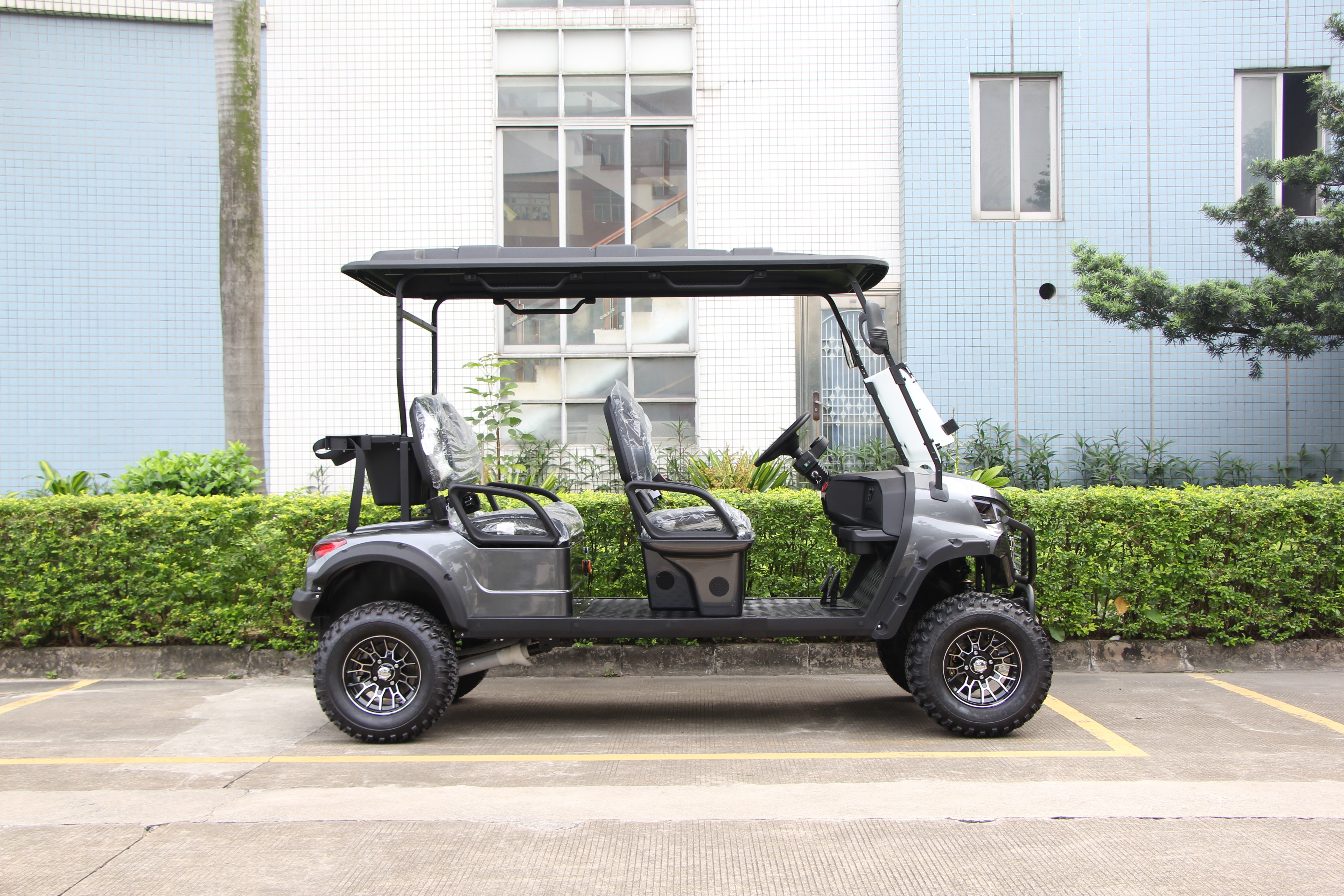
During container loading, vehicles are anchored using industrial-grade ratchet tie-downs attached to designated chassis points. Wheel chocks block horizontal shift, while the independent suspension is locked under light compression to minimize movement during vessel rolling. For international trade demands, where 80% of factory output serves global markets across North America, South America, Europe, the Middle East, and Southeast Asia, standardization is critical. Manufacturing facilities scaled to produce 1,000 units per month utilize standardized loading docks and custom steel-crate stacking systems to ensure high container volume capacity while preventing vehicle-to-vehicle contact.
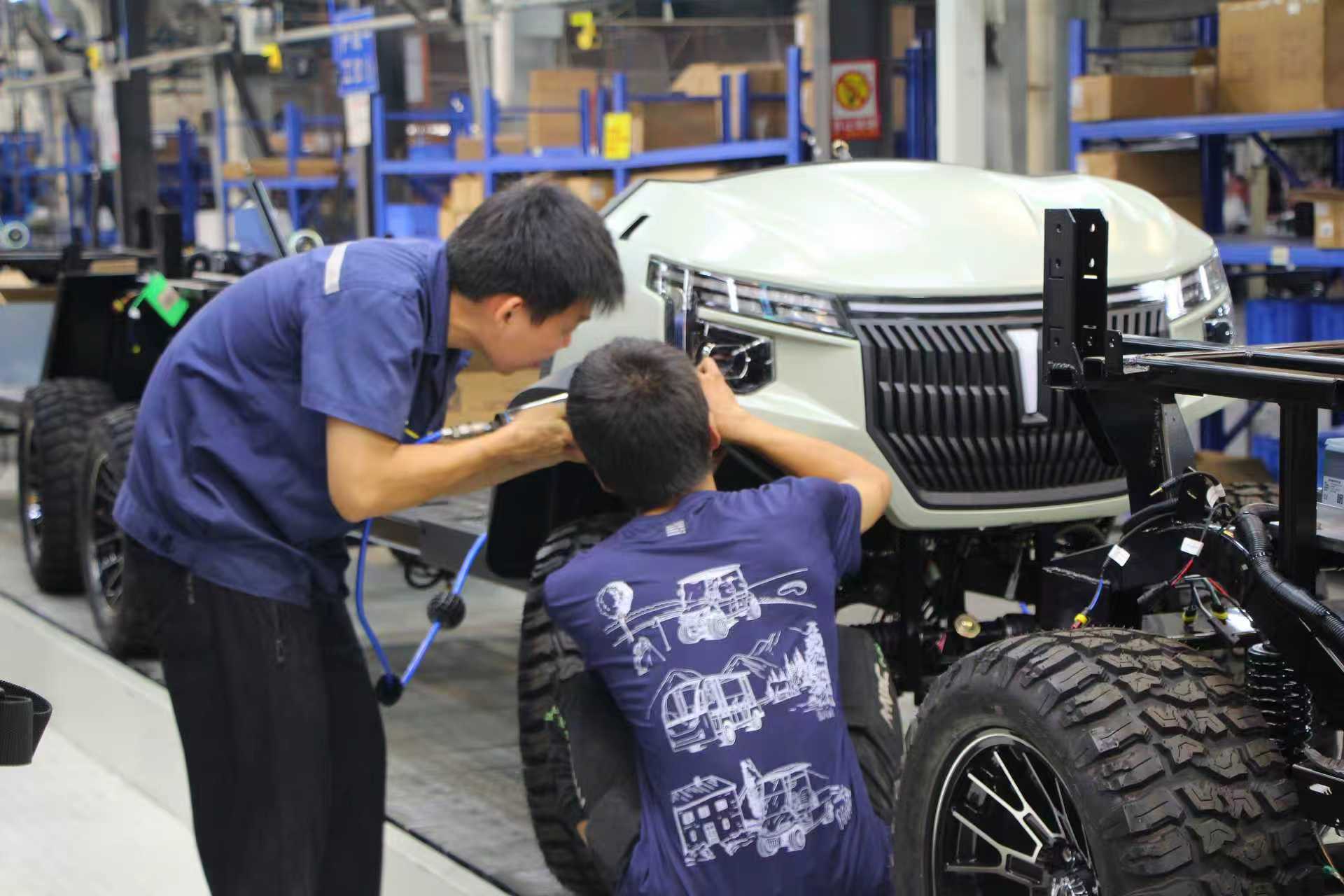
Proven execution in major international supply projects—such as supplying over 3,500 shuttle units to Cuba and custom sanitation vehicles to Singapore—demonstrates that rigorous packaging directly impacts fleet delivery success. In addition to physical bracing, power systems are isolated, battery terminals are disconnected and insulated, and sensitive electronics are wrapped in moisture barrier bags to neutralize salt-air degradation throughout the 15 to 30 day ocean transit period.
Data/Solution Comparison
Selecting the appropriate ocean transport packaging configuration depends on order volume, destination port handling equipment, and local assembly capabilities.
| Packaging Method | Protection Level | Container Space Efficiency | Transit Lead Time | Primary Application Scenario |
|---|---|---|---|---|
| CBU (Steel Frame Crate) | Maximum (Full Frame Enclosure) | Standard (1-2 units per stack) | 15 - 20 Days | Resorts, golf courses, and end-users requiring immediate operational readiness upon arrival. |
| SKD (Semi-Knocked Down) | High (Reinforced Box + Bracing) | High (30% space saving) | 15 - 30 Days | Regional dealers and commercial fleets balancing freight costs with minimal final assembly. |
| CKD (Completely Knocked Down) | High (Component Palletization) | Maximum (Highest unit density) | 20 - 30 Days | Large-scale municipal or distributor orders with overseas assembly infrastructure. |
Frequently Asked Questions (FAQ)
How are electric golf cart batteries prepared to comply with ocean shipping safety standards?
Batteries are switched off, disconnected, and isolated at the terminal points to prevent electrical discharge. For lithium or lead-acid setups, state-of-charge levels are adjusted according to maritime dangerous goods standards, and safety certification documentation is attached to the shipping manifest.
What international quality certifications apply to exported electric golf carts?
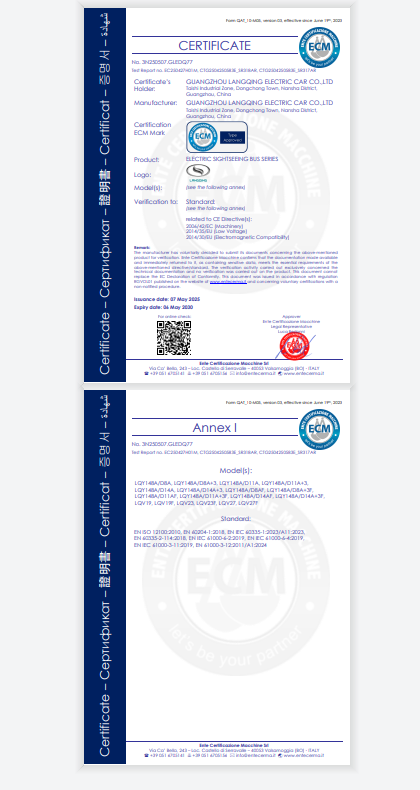
Exported electric vehicles comply with international standards, holding certifications such as EU CE (Certificate numbers 3N250506.GLEDQ43, 3N250507.GLEDQ77, 3N250507.GLEDQ78) as well as ISO9001, ISO14001, ISO10012, and ISO45001 management system qualifications.
What are the standard payment and shipping terms for international ocean transport?
Standard payment terms are structured as a 30% deposit with the remaining balance due before loading. Shipments are typically executed via sea freight under industry-standard commercial export agreements.
Final Conclusion & Recommendations
Ocean transport packaging for electric golf carts requires steel-framed structural support, precise container tie-downs, and environmental sealing against marine air. Matching the packaging method (CBU, SKD, or CKD) to destination capabilities minimizes transport costs while protecting vehicle aesthetics and functional electronics. Comprehensive quality control and road testing prior to packing ensure fleet reliability upon arrival. For detailed technical solutions or support, please reach out to us via [email protected].
About Us
Guangzhou Langqing Electric Car CO., LTD. was established in 2000 in the Nansha Economic Development Zone, Guangzhou. Operating a 35,000-square-meter facility with a monthly capacity of 1,000 units, the company maintains an export ratio of 80% across North America, South America, Europe, the Middle East, and Asia. Recognized as a national High-tech Enterprise for 16 consecutive years, the company holds ISO9001, ISO14001, ISO45001, and EU CE certifications and has served government and commercial projects across Egypt, Singapore, Cuba, and Argentina.

Lastest
-
How are replacement spare parts provided for a 17seats bus?
2026-08-12 -
What is the typical deposit percentage for a 23seats bus order?
2026-08-12 -
What recyclable components are used in modern golf carts?
2026-08-12 -
What is the warranty policy for air conditioning on 23seats bus?
2026-08-12 -
What battery specs should I check when buying electric golf carts?
2026-08-12
SUBSCRIBE
INQUIRY