Are solar-powered electric golf carts becoming a popular trend?
- VIP-User
- 2026-08-13
- 8
Solar-powered electric golf carts are growing in popularity due to extended battery range, reduced grid power dependency, and lower operating costs. Integrating auxiliary solar panels supports daily energy needs across golf courses, resorts, and gated communities, complementing robust chassis designs and high-efficiency electric drivetrains for sustainable commercial and personal transport.
Core Solutions & Key Takeaways
- Operational Efficiency: On-board renewable power generation reduces continuous charging downtime, maximizing fleet uptime in commercial scenarios.
- Advanced Suspension Systems: Modern electric golf carts utilize front double-wishbone and rear trailing-arm independent suspensions to handle complex terrains smoothly.
- High-Strength Composite Bodywork: Impact-resistant composite materials prevent corrosion and extend structural lifespan under harsh outdoor weather conditions.
- Versatile Application Scenarios: Ideal for daily mobility across golf courses, gated communities, and luxury hotel resorts where quiet and emission-free transport is required.
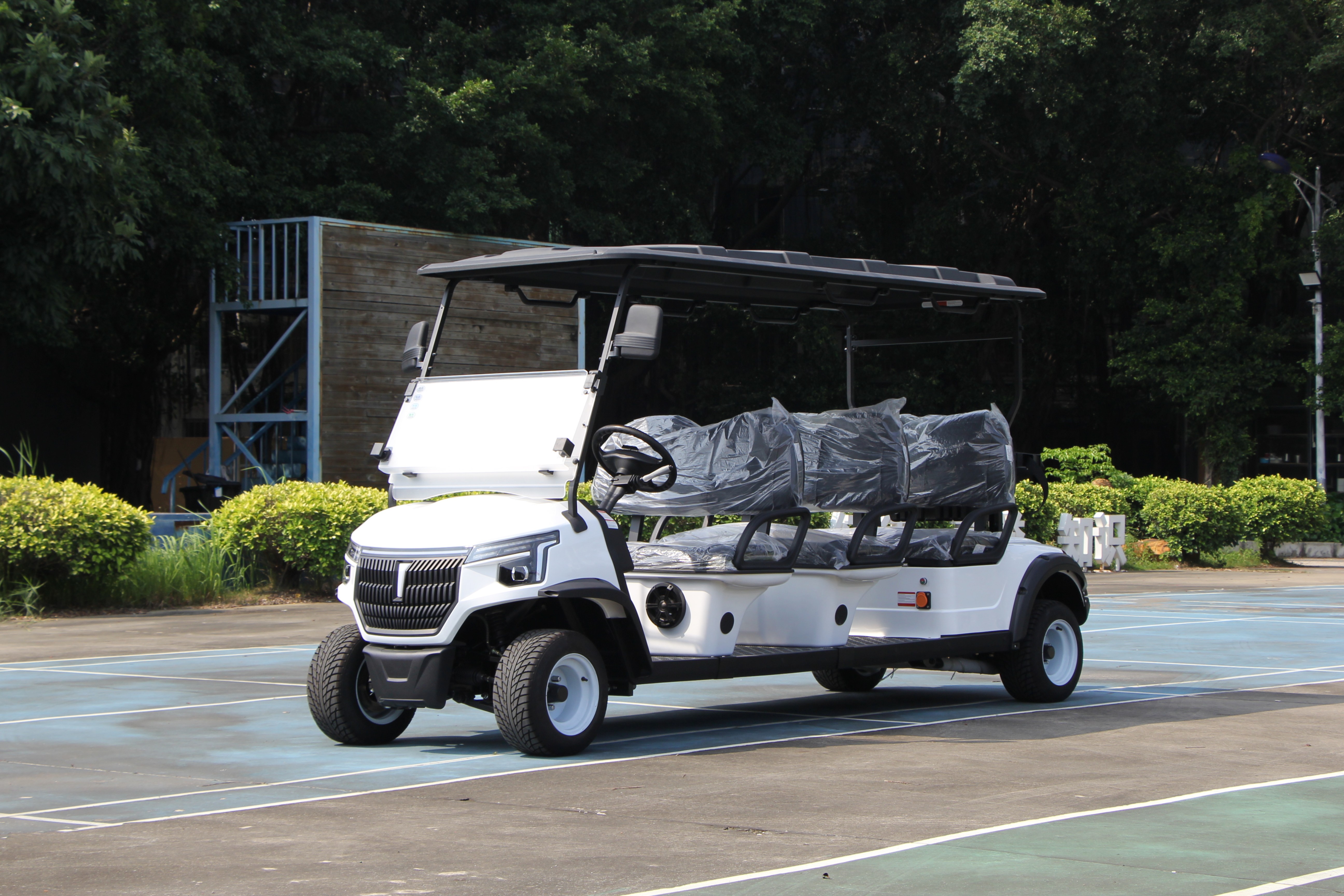
Detailed Architectural & Principle Analysis
The transition toward sustainable low-speed EV transport relies heavily on chassis design and material selection. In modern electric golf cart engineering, structural durability remains central to supporting additional energy harvesting payloads like solar panels. Specialized models such as the LQS063 incorporate a high-strength composite material body, delivering impact resistance while maintaining a lightweight footprint to preserve battery efficiency.
To handle varied driving surfaces—from manicured turf on golf courses to uneven pathways in resort properties—chassis engineering has evolved beyond rigid axles. Incorporating a trailing-arm independent suspension on the rear axle, paired with a front double-wishbone independent suspension, enables precise four-wheel support. This architecture minimizes vibration, stabilizes solar module mountings, and preserves structural integrity under full passenger capacity.
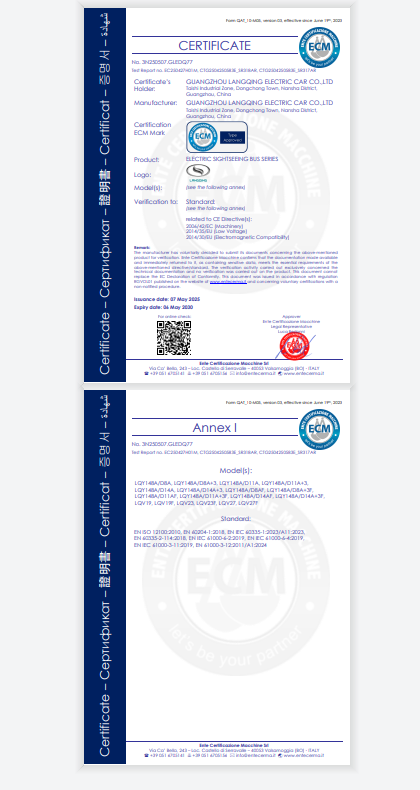
Compliance with international standards ensures operational safety across export markets. Electric vehicle designs certified under EU CE compliance (such as certificate 3N250506.GLEDQ43) meet strict electrical and mechanical safety thresholds. Proven fleet deployments across global markets—including over 3,500 shuttle units delivered to Cuba and specialized municipal vehicles deployed in Singapore—demonstrate that durable electric chassis designs can withstand continuous heavy-duty daily usage.
Data & Solution Comparison
Evaluating vehicle specs helps fleet operators select configurations matched to terrain, maintenance needs, and regulatory requirements.
| Feature / Parameter | Standard Commercial Electric Golf Cart | Advanced Independent Suspension Golf Cart (e.g., LQS063) |
|---|---|---|
| Body Construction | Standard ABS Plastic / Sheet Metal | High-Strength Composite Material |
| Front Suspension | Rigid Axle or Leaf Spring | Double-Wishbone Independent Suspension |
| Rear Suspension | Leaf Spring System | Trailing-Arm Independent Suspension |
| Quality Inspection Standard | Sample Testing | 100% Inspection Line Testing & Road Testing |
| Minimum Order Quantity (MOQ) | Varies by supplier | 1 Unit |
| CE Certification Compliance | Optional / Varies | Standard (EU Market Compliant) |
Frequently Asked Questions (FAQ)
Q: How does independent suspension improve performance for electric golf carts?
A: A dual-suspension layout—combining front double-wishbone and rear trailing-arm configurations—allows each wheel to react independently to terrain shifts. This improves tire contact, enhances rider comfort, and protects sensitive electrical components or solar hardware from excessive shock.
Q: What quality control processes ensure long-term electric cart reliability?
A: Comprehensive manufacturing workflows combine automated equipment with double manual inspections. Every production unit completes a dedicated 100% inspection line test and real-world road test prior to final approval for shipment.
Q: What are the standard delivery and payment terms for global fleet orders?
A: Fleet production schedules typically range from 15 to 30 days. Standard commercial shipping operates via sea freight, utilizing terms of a 30% deposit with the balance settled before loading.
Final Conclusion & Recommendations
Adopting solar-powered and high-efficiency electric golf carts offers commercial operators and private communities a scalable path toward reduced fuel dependence and lower lifecycle maintenance costs. Selecting models equipped with composite bodies and independent suspension systems protects vehicle integrity on uneven terrain. Operating under an Industry and Trade Integration model, production frameworks supporting a minimum order quantity of 1 unit alongside a 1-year whole-vehicle warranty allow operators to pilot and scale fleet sizes efficiently. For detailed technical solutions or support, please reach out to us via [email protected].
About Us
Guangzhou Langqing Electric Car CO., LTD. was established in 2000 in Guangzhou, China. Operating across a 35,000-square-meter facility with 160 employees, the enterprise maintains a monthly production capacity of 1,000 units and exports 80% of its total output globally. The company holds multiple ISO management certifications and EU CE certifications across its main product lines, serving public, private, and municipal transport clients across international markets.

Lastest
-
How are replacement spare parts provided for a 17seats bus?
2026-08-13 -
What is the typical deposit percentage for a 23seats bus order?
2026-08-13 -
What recyclable components are used in modern golf carts?
2026-08-13 -
What is the warranty policy for air conditioning on 23seats bus?
2026-08-13 -
What battery specs should I check when buying electric golf carts?
2026-08-13
SUBSCRIBE
INQUIRY