Are hydrogen fuel cell technology options ready for 11seats bus?
- VIP-User
- 2026-08-14
- 9
Hydrogen fuel cell technology is currently not commercially ready for 11-seat sightseeing buses. High production expenses, complex storage requirements, and a lack of fueling infrastructure make hydrogen impractical for low-speed shuttle applications. Battery electric power systems, such as those powering the LQY148A 11-seat bus, provide superior cost-efficiency, operational safety, and proven performance across commercial sites.
Core Solutions & Key Takeaways
- Infrastructure Limitations: Hydrogen refilling stations are costly and scarce, whereas battery electric 11-seat buses utilize standard charging setups accessible at any commercial facility.
- Volumetric Efficiency: High-pressure hydrogen storage tanks require substantial space, compromising passenger legroom and open-cockpit aesthetics in compact 11-seater passenger designs.
- Cost of Ownership: Fuel cell stacks remain expensive to manufacture and maintain compared to mature lithium-battery electric powertrains.
- Operational Environments: Battery electric sightseeing buses are heavily optimized for scenic areas, tourist attractions, resorts, hotels, and historical landmarks where quiet, emission-free operation is required.
Detailed Architectural & Engineering Analysis
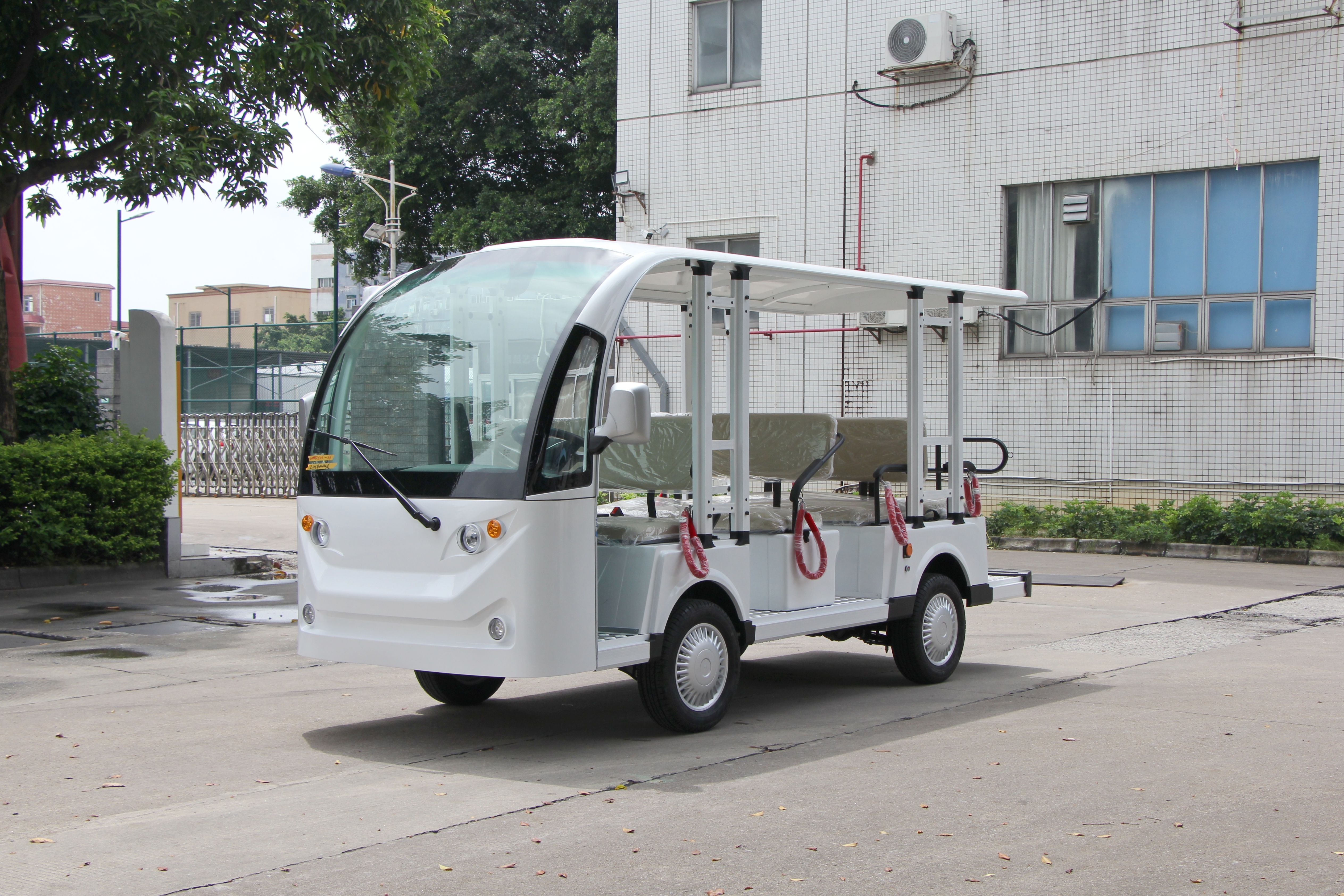
Low-speed passenger transport vehicles, such as the 11-seat sightseeing bus, depend heavily on chassis stability, passenger comfort, and structural simplicity. The integration of hydrogen fuel cell systems poses engineering challenges in low-speed passenger transport. Hydrogen fuel cells require hydrogen storage cylinders, fuel cell stacks, humidifiers, and thermal management units. Fitting these bulky systems into an open sightseeing vehicle increases weight and redistributes center-of-mass metrics, impacting vehicle dynamics.
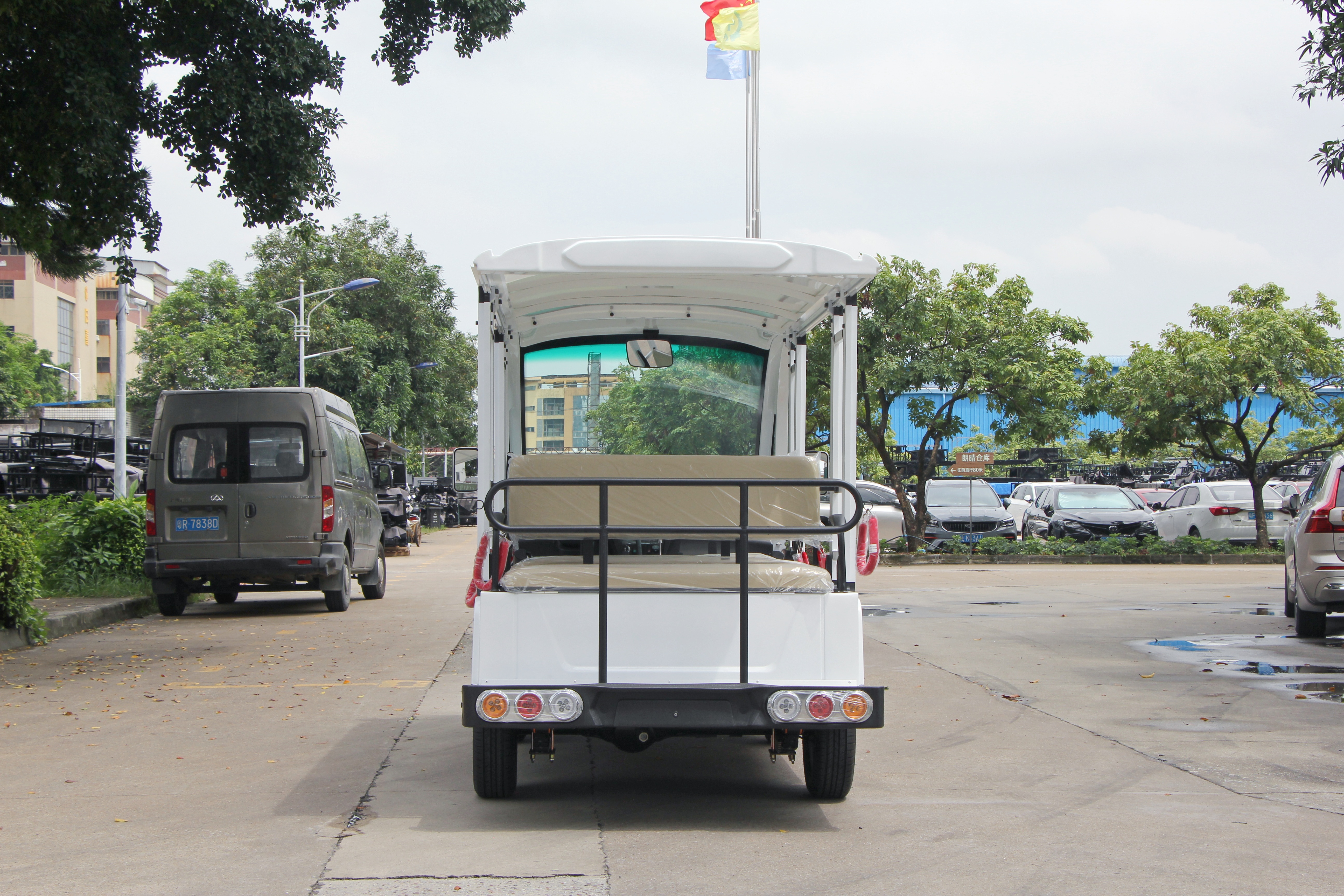
Conversely, battery electric platforms like the LQY148A utilize compact electric powertrains integrated directly with high-strength chassis components. Built on an anti-rust steel chassis frame, the vehicle incorporates MacPherson independent front suspension paired with leaf-spring rear suspension. This structural combination ensures road adaptability and ride stability without sacrificing cabin space.
Body material selection further emphasizes the efficiency of battery electric architectures. The LQY148A features a PT + PBT alloy injection-molded front cover, engineering high impact resistance alongside lightweight properties. Coupled with sensitive braking systems and electric power-assisted steering, the electric architecture delivers automotive-grade handling tailored for scenic transport.
Compliance and safety are backed by international standards. Vehicle designs by Guangzhou Langqing Electric Car CO., LTD. hold European CE certifications (Certificate numbers: 3N250506.GLEDQ43, 3N250507.GLEDQ77, and 3N250507.GLEDQ78). Large-scale real-world deployments validate this electric platform, including over 3,500 shuttle units operating in Cuba, 131 cultural tourism vehicles at an Egyptian museum project, and 20 airport shuttle units in Argentina.
Data & Solution Comparison
| Comparison Parameter | Hydrogen Fuel Cell Concept | LQY148A Battery Electric Bus |
|---|---|---|
| Technology Readiness Level | Experimental / High Cost | Commercialized / Fully Mature |
| Chassis Design Integration | Requires extra tank clearance | High-strength anti-rust steel frame |
| Front Suspension System | Non-standard layout | MacPherson independent suspension |
| Rear Suspension System | Custom structural load frame | Leaf-spring suspension |
| Refueling / Charging Access | Specialized hydrogen stations | Standard electric charging grid |
| Steering & Braking | Custom prototype units | Electric power steering & sensitive braking |
| Quality Inspection Standard | Variable prototype testing | 100% inspection line and road testing |
Frequently Asked Questions (FAQ)
Why are battery electric powertrains preferred over hydrogen fuel cells for 11-seat buses?
Battery electric systems offer superior energy conversion efficiency, lower capital costs, easy access to standard charging infrastructure, and simplified vehicle packaging ideal for low-speed shuttle transport.
What suspension structure is integrated into the LQY148A 11-seat electric bus?
The LQY148A utilizes a MacPherson independent front suspension combined with a leaf-spring rear suspension mounted on a high-strength anti-rust steel chassis to deliver road adaptability and structural durability.
How is quality control verified prior to vehicle delivery?
Every vehicle undergoes 100% inspection line testing and road testing. Only units passing rigorous technical verification receive approval for shipment.
Final Conclusion & Recommendations
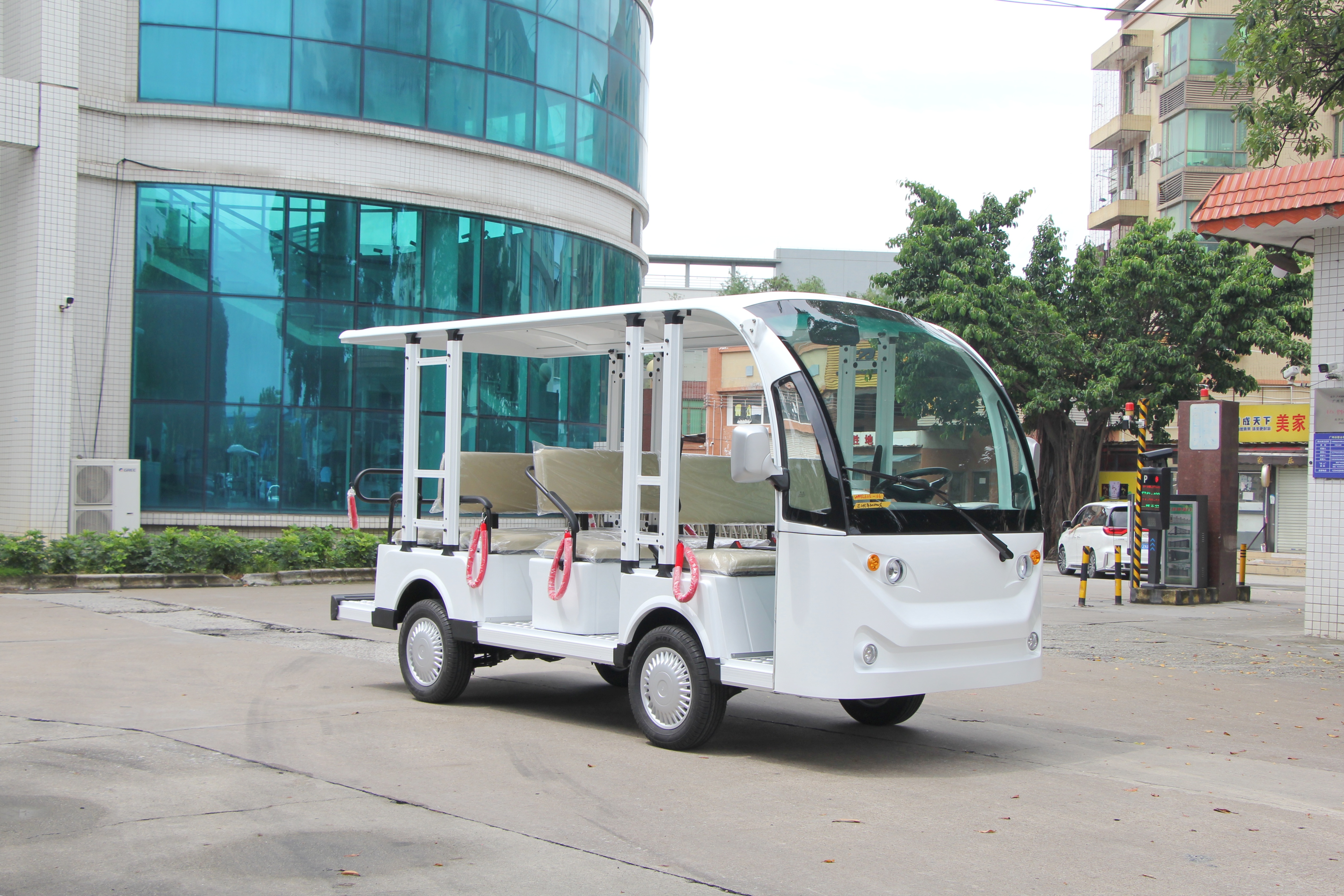
Hydrogen fuel cell technology remains unsuited for 11-seat sightseeing buses due to infrastructure barriers, packaging limitations, and high overall costs. Operators requiring reliable short-range passenger mobility benefit immediately from proven battery electric solutions. The LQY148A 11-seat bus offers lightweight structural engineering, automotive-grade control, and verified performance backed by comprehensive inspection line standards. Orders are available with a minimum order quantity of 1 unit and a production lead time of 15 to 20 days. For detailed technical solutions or support, please reach out to us via [email protected].
About Us
Guangzhou Langqing Electric Car CO., LTD. was established in 2000 in the Nansha Economic Development Zone, Guangzhou. Operating from a 35,000-square-meter facility with 160 employees and a 30-member R&D team, the company maintains a monthly capacity of 1,000 units. Certified under ISO9001, ISO14001, ISO10012, ISO45001, and EU CE, the enterprise has served public and commercial clients across North America, South America, Europe, the Middle East, and Southeast Asia.
Lastest
-
How are replacement spare parts provided for a 17seats bus?
2026-08-14 -
What is the typical deposit percentage for a 23seats bus order?
2026-08-14 -
What recyclable components are used in modern golf carts?
2026-08-14 -
What is the warranty policy for air conditioning on 23seats bus?
2026-08-14 -
What battery specs should I check when buying electric golf carts?
2026-08-14
SUBSCRIBE
INQUIRY