Are electric 11seats buses replacing traditional petrol models?
- VIP-User
- 2026-08-13
- 10
Electric 11seats buses are rapidly replacing traditional petrol models across commercial tourist areas, resorts, and municipal transport networks. Driven by zero exhaust emissions, lower maintenance requirements, superior passenger quietness, and high-strength anti-rust chassis designs, electric buses deliver significantly lower long-term operational costs while satisfying strict global environmental compliance standards.
Core Solutions & Key Takeaways
- Zero Exhaust Emissions: Electric 11seats buses eliminate localized tailpipe pollutants, fulfilling environmental compliance mandates in scenic parks, resorts, and gated communities.
- Reduced Operating Overhead: Removing internal combustion components decreases scheduled mechanical service cycles, directly lowering total lifecycle operational expenses.
- Automotive-Grade Structural Engineering: High-strength anti-rust steel chassis platforms paired with PT + PBT alloy front covers provide superior impact resistance and extended structural service life.
- Refined Handling & Passenger Comfort: Electric power-assisted steering combined with MacPherson independent front suspension delivers precise vehicle control and smooth riding dynamics.
Detailed Architectural/Principle Analysis
Modern electric open-sightseeing buses, such as the LQY148A model, utilize a lightweight roof structure integrated with an open cockpit layout. This design delivers wide panoramic field-of-view parameters while preserving driver stability. The front enclosure uses PT + PBT alloy injection molding, providing elevated impact toughness compared to traditional fiberglass composites. Simple headlamp geometry offers modern aesthetics alongside functional night illumination.
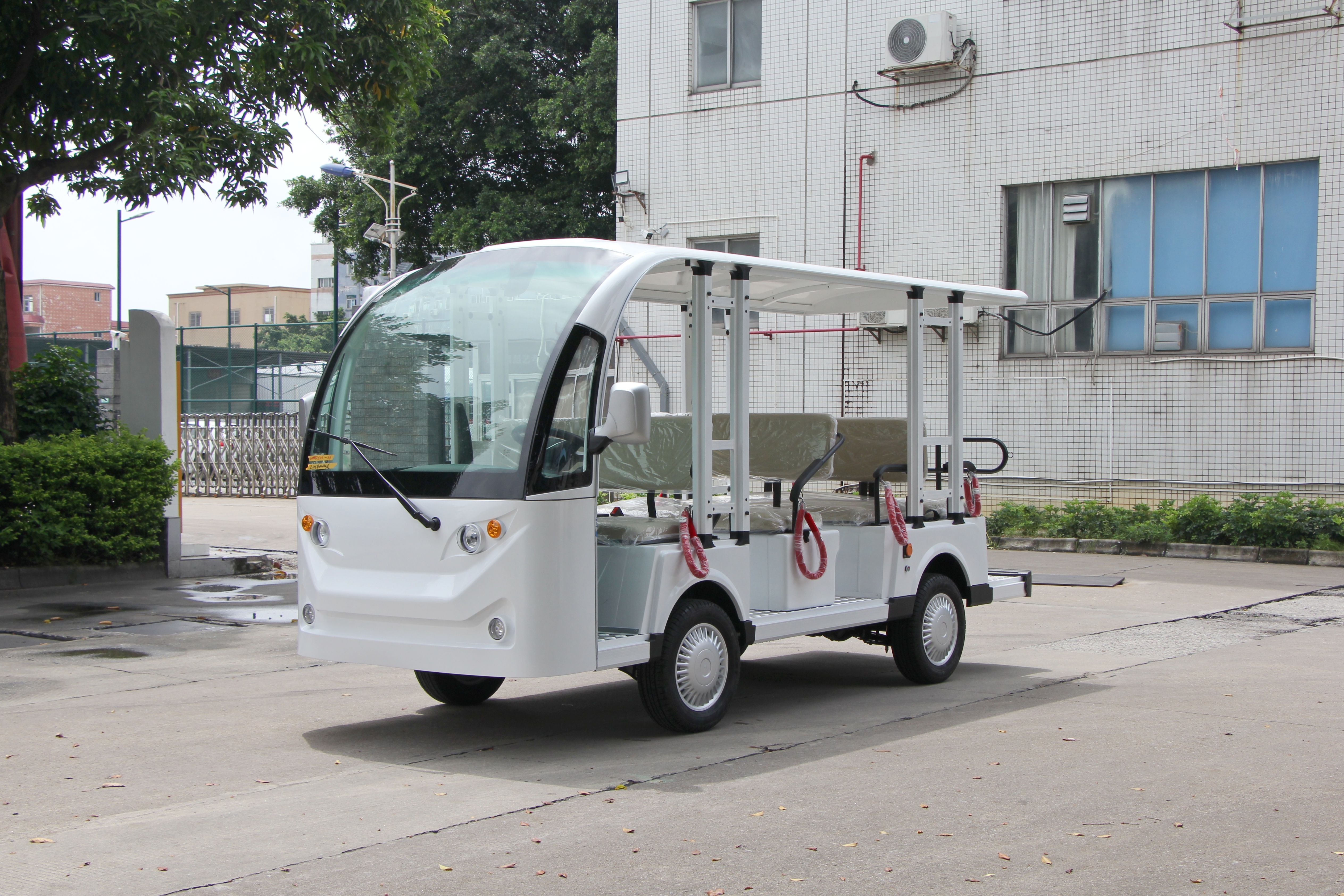
Underneath the bodywork, the vehicle relies on a high-strength anti-rust steel chassis to endure high-humidity and high-frequency shuttle conditions. The front axle integrates a MacPherson independent suspension system to absorb road irregularities, while the rear axle employs leaf-spring suspension to balance heavy load-bearing capacity with operational stability. Control dynamics are supported by a sensitive braking system paired with electric power-assisted steering (EPS) for agile maneuverability in high-density pedestrian areas.
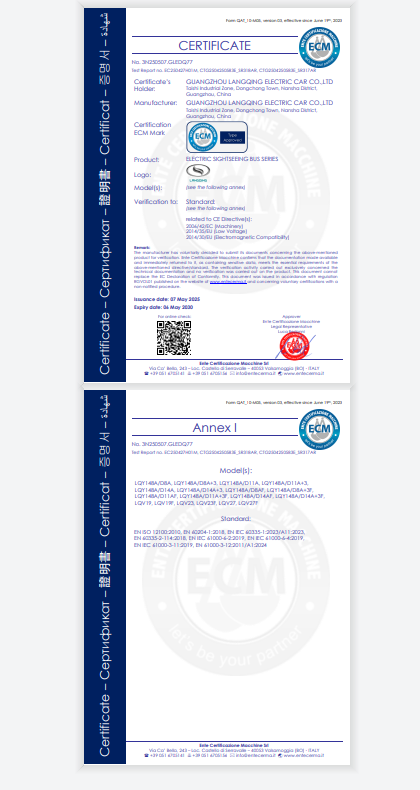
Compliance and international adoption validate this engineering transition. Manufacturers like Guangzhou Langqing Electric Car CO., LTD. hold EU CE certifications (Certificated under 3N250506.GLEDQ43, 3N250507.GLEDQ77, and 3N250507.GLEDQ78) for electric golf carts, sightseeing buses, and mini trucks. Real-world fleet transitions include over 3,500 shuttle units deployed in Cuba, 156 municipal sanitation and transfer vehicles in Singapore, and 131 cultural tourism shuttles for museum operations in Egypt.
Data/Solution Comparison
| Technical / Operational Feature | Electric 11seats Sightseeing Bus (LQY148A) | Traditional Petrol Sightseeing Bus |
|---|---|---|
| Powertrain & Emission Standard | Pure Electric / Zero Tailpipe Emissions | Internal Combustion / Carbon Exhaust Emissions |
| Front Body Enclosure Material | PT + PBT Alloy Injection Molded | Standard Fiberglass or Sheet Metal |
| Front Axle Suspension | MacPherson Independent Suspension | Rigid Non-Independent Axle |
| Steering Assist Mechanism | Electric Power-Assisted Steering (EPS) | Hydraulic or Manual Mechanical Steering |
| Quality Assurance Standard | 100% Line Testing & Dedicated Road Inspection | Variable Batch Inspection Protocols |
Frequently Asked Questions (FAQ)
What structural features prevent corrosion in high-humidity transit environments?
Vehicles utilize high-strength anti-rust steel chassis frames alongside non-corrosive PT + PBT alloy injection-molded front panels, preventing structural degradation in coastal resorts and humid climate zones.
How does electric power-assisted steering improve low-speed shuttle operation?
Electric power-assisted steering reduces steering effort at low speeds, enabling drivers to execute precise turns through tight resort pathways, historical sites, and crowded tourist corridors.
What pre-delivery testing protocols ensure vehicle reliability?
Every unit undergoes 100% inspection line testing and functional road testing prior to factory dispatch, verifying brake sensitivity, steering response, and electrical system integrity.
Final Conclusion & Recommendations
Transitioning from petrol models to electric 11seats buses aligns with global fleet decarbonization and operational efficiency goals. Integrated industry and trade operations support custom production runs backed by a 1-year full-vehicle warranty and a monthly output capacity of 1,000 units. Quality inspection workflows combine automated test line verification with road evaluation to guarantee site-ready performance. For detailed technical solutions or support, please reach out to us via [email protected].
About Us
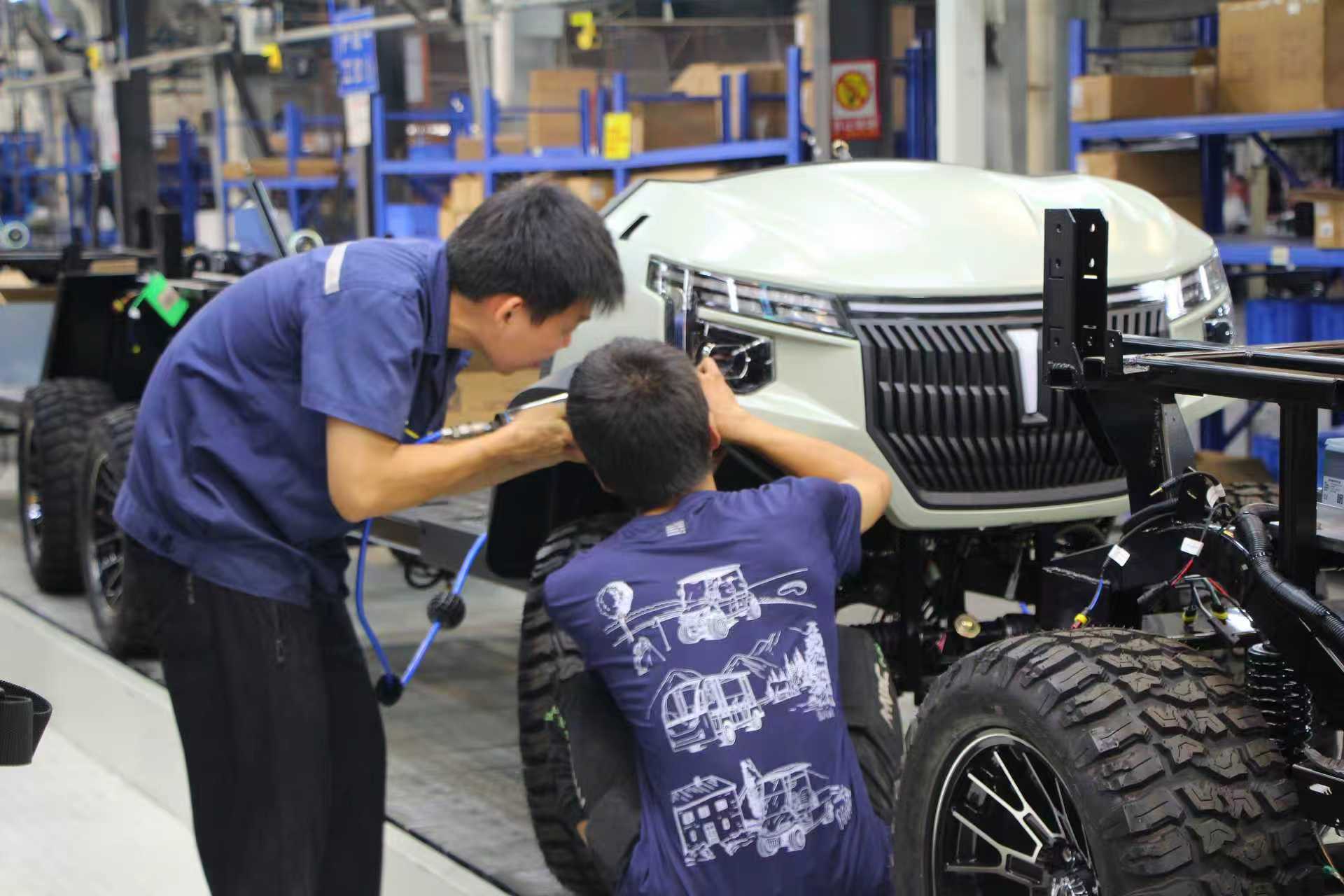
Guangzhou Langqing Electric Car CO., LTD. was established in 2000 in the Nansha Economic Development Zone, Guangzhou. Operating a 35,000-square-meter production site with a monthly capacity of 1,000 units, the company maintains a 30-member R&D team, 10 testing specialists, and 20 quality control professionals. Recognized as a National High-tech Enterprise for 16 consecutive years with over 80 patents, the enterprise holds ISO9001, ISO14001, ISO 10012, ISO45001, and EU CE certifications, delivering low-speed electric transport solutions to clients across North America, Europe, the Middle East, and Southeast Asia.
Lastest
-
How are replacement spare parts provided for a 17seats bus?
2026-08-13 -
What is the typical deposit percentage for a 23seats bus order?
2026-08-13 -
What recyclable components are used in modern golf carts?
2026-08-13 -
What is the warranty policy for air conditioning on 23seats bus?
2026-08-13 -
What battery specs should I check when buying electric golf carts?
2026-08-13
SUBSCRIBE
INQUIRY